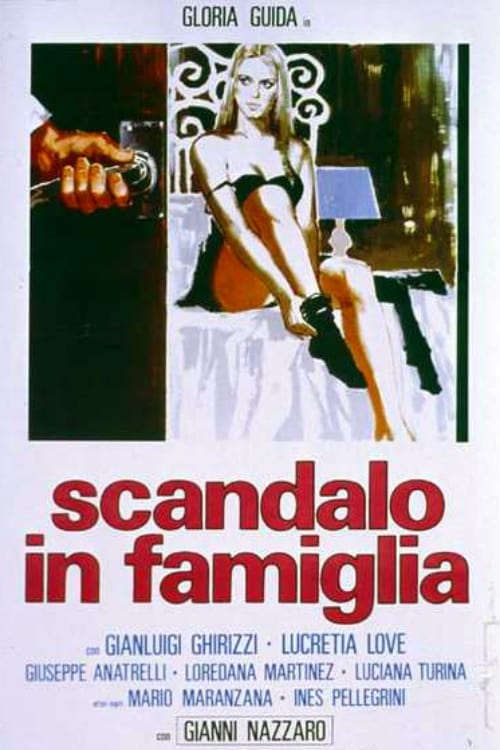
Scandal In the Family
1976
No user ratings available yet
Diversity score: 4.5 out of 10

1968
Director
Hristos Kyriakopoulos
Runtime
90 minutes
Average Rating
No ratings yetSynopsis
Xristos is married to the rich Rena. In fact the rich is his mother-in-law, who has big business abroad. In Greece the mother-in-law gives the hotel's managment to Xristos but also loads to him all the work. Desperate, he decides to slam the yoke and kill her ...
Overall Score
Fair
Category Breakdown
LGBTQ+ Representation
The film operates within a heteronormative framework centered on marriage and in-law dynamics. No queer identities or non-cisnormative narratives are present in the story.
Gender Representation
The narrative subverts patriarchal norms by making the mother-in-law the primary economic authority. This places the male protagonist in a subservient, exhausted role rather than a dominant one.
Racial & Ethnic Diversity
The production focuses on a localized, homogeneous Greek social setting. There is no evidence of intersectional racial diversity or non-European identities in the cast.
Religious & Cultural Diversity
The film critiques Mediterranean family institutions by framing the matriarch as an oppressive capitalist force. It explores how economic interests can corrupt traditional familial bonds.
Disability Representation
The provided material contains no information regarding the depiction of physical or neurodivergent disabilities.
Strengths
Areas for Improvement
AI Analysis
The film functions as a social critique of domestic and economic power structures. It moves away from idealized domesticity to present the family unit as a site of labor exploitation and psychological conflict. While the film lacks racial and LGBTQ+ intersectionality, it gains merit by deconstructing traditional hierarchies. The subversion of the 'stable male leader' trope provides a unique lens on gendered authority. Ultimately, the score reflects a work that is culturally specific and traditional in its casting, yet progressive in its critique of systemic social and familial roles.
1976

2006

1983
1981

1981

1959

1988

1983

1957
1963

1956
1969
No reviews yet. Be the first to share your thoughts on this movie!
Use the rating form above to leave a star rating and optional review.