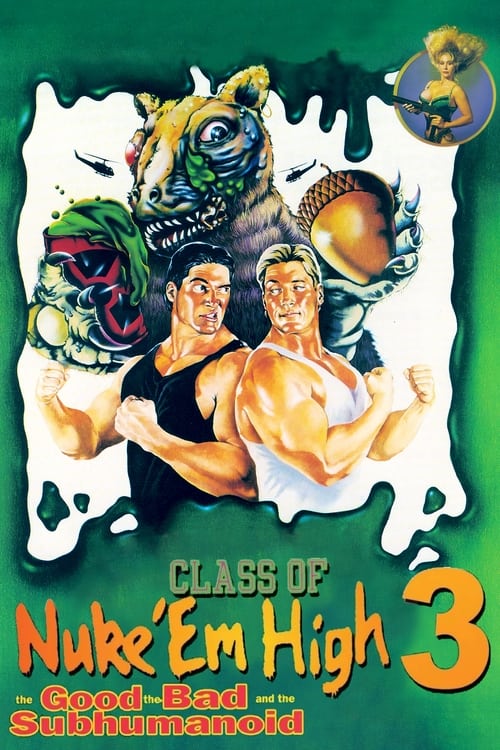
Class of Nuke 'Em High 3: The Good, the Bad and the Subhumanoid
1994
No user ratings available yet
Representation score: 6.8 out of 10

Representation Score
Fair
1991
RDirector
Eric Louzil
Runtime
95 minutes
Average Rating
No ratings yetNew Showbiz Analysis
Class of Nuke 'Em High 2: Subhumanoid Meltdown is a product of its low-budget, cult-cinema era, prioritizing camp and genre spectacle over social commentary. The narrative relies heavily on established clichés, such as the rebellious teen and mutant horror, which limits its engagement with inclusive representation. The film functions within traditional frameworks, focusing on heterosexual romance and the sexualization of female characters. It lacks the intentionality needed to challenge existing social hierarchies or provide multi-layered representation. Ultimately, the work serves as a conventional genre exercise. It uses biological mutation as a tool for sci-fi tension rather than exploring complex themes of identity or systemic critique.
Category Breakdown
The film follows a conventional structure centered around heterosexual relationships. There are no characters with non-traditional gender identities.
Female characters are primarily used as sexualized archetypes within a horror-comedy setting. While Victoria drives the plot, she does not challenge traditional gender roles.
The narrative focuses on biological mutations rather than ethnic or racial identity. There is no evidence of a diverse cast reflecting multiple aspects of identity.
The story explores social hierarchies and scientific authority through science fiction. While subhumanoids mirror labor exploitation, the film avoids explicit critiques of religion or cultural practices.
Biological mutations serve as horror plot devices rather than nuanced explorations of disability. The subhumanoids' lack of emotion is framed through genre tension rather than lived experience.
Present on Screen
Limited or Absent
Official Synopsis
At the Tromaville Institute of Technology's nuclear plant, Prof. Holt has perfected "subhumanoids": living beings without emotions who perform menial tasks. When school reporter Roger Smith meets a beautiful subhumanoid named Victoria, they fall in love and he becomes determined to save her and the school from a giant mutant squirrel, Tromie.
1994

1984
1972

1993

1973
1986

2011

1984
No reviews yet. Be the first to share your thoughts on this movie!
Use the rating form above to leave a star rating and optional review.