
Class of Nuke 'Em High 2: Subhumanoid Meltdown
1991
No user ratings available yet
Representation score: 4.1 out of 10
Representation Score
Good
1994
RDirector
Eric Louzil
Runtime
102 minutes
Average Rating
No ratings yetNew Showbiz Analysis
The film uses science fiction and mutation as metaphors for social integration and the struggle for coexistence. By focusing on the tension between humans and subhumanoids, it explores the complexities of identity and systemic restructuring. However, the narrative structure emphasizes patriarchal family dynamics and biological evolution. This focus limits the visibility of gender diversity and sexual orientation. Ultimately, the work functions as a genre-based exploration of 'otherness.' It deconstructs boundaries between the normal and the mutated, providing an unconventional commentary on social cohesion.
Category Breakdown
The film does not include explicit LGBTQ+ characters or explore non-straight relationships. The narrative focuses on biological and evolutionary tensions between humans and subhumanoids.
The story centers on patriarchal lineage and conflicts between Roger Smith and his sons. It does not explicitly challenge traditional gender hierarchies or highlight female empowerment.
The 'subhumanoid' character serves as a metaphor for racial and ethnic diversity. The plot explores themes of coexistence and the integration of different biological species into society.
The narrative critiques industrial structures through the destruction of the Nukamama Power Plant. It favors an anarchic, subjective moral landscape over polished Western cinematic norms.
Subhumanoid characters use physical mutation as a vehicle for ability to act. These biologically 'othered' characters drive the plot as both heroes and villains rather than passive victims.
Present on Screen
Limited or Absent
Official Synopsis
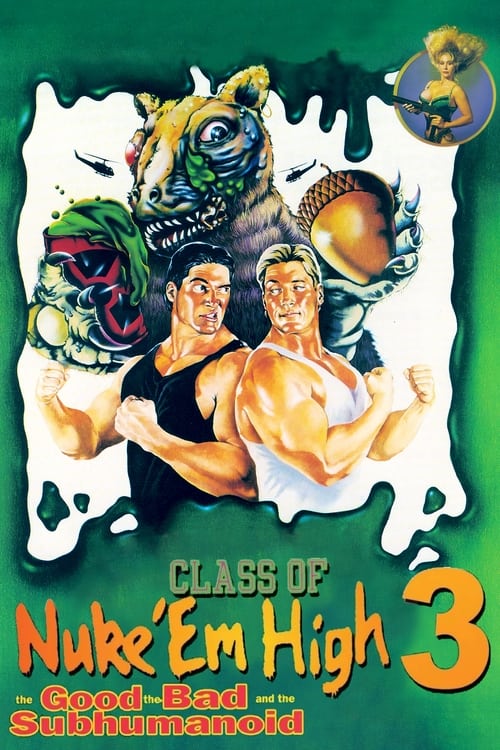
It's the final chapter in the cult classic Class of Nuke'Em High Trilogy, and this time the fate of Tromaville hangs in the balance! Following the destruction of the Nukamama Power Plant by the lovable and horribly mutated toxic squirrel Tromie. Roger Smith (Brick Bronsky) and his half-subhumanoid son Adlai (also played by Brick Bronsky) are working to rebuild Tromaville into a place where human and subhumanoid can live together in peace. Unbeknownst to them, Adlai's twin brother Dick (again played by Brick Bronsky!), kidnapped at birth and raised by the evil Power Clite, has plans to regain contol of the Subhumanoids and turn Tromaville into a nuclear waste dump. In a showdown for the ages, "The Good, the Bad and the Subhumanoid" face off in an explosive sci-fi battle of epic proportions!
1991

1993
2011

1984

1989
1986
2013

1984
No reviews yet. Be the first to share your thoughts on this movie!
Use the rating form above to leave a star rating and optional review.