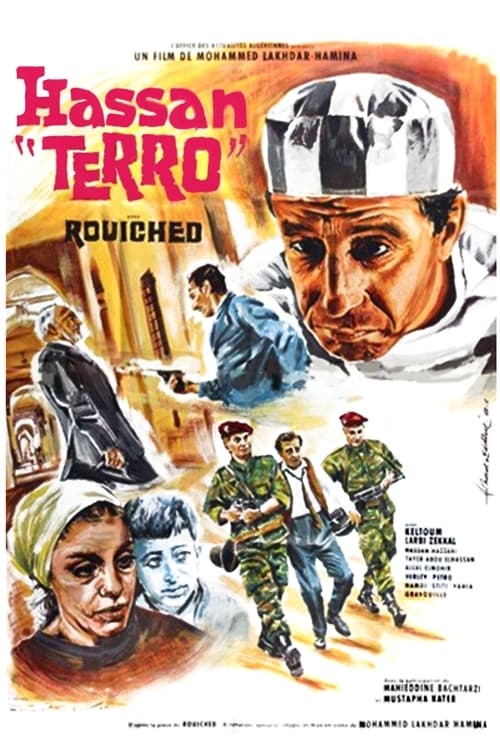
Hassan Terro
1967
No user ratings available yet
Representation score: 3.9 out of 10
Representation Score
Good
1970
Director
Ahmed Rachedi
Runtime
137 minutes
Average Rating
No ratings yetNew Showbiz Analysis
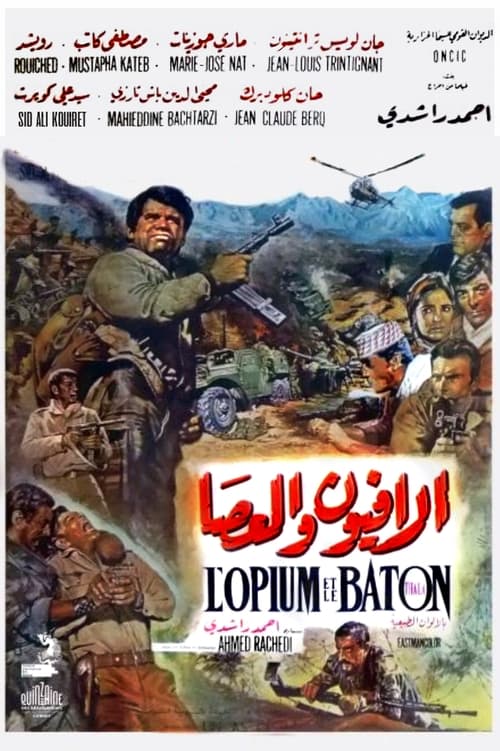
Opium and the Stick is a landmark of cinematic resistance that centers the Kabyle experience. By using the Tamazight language, the film asserts a specific cultural identity that challenges both colonial and monolithic national narratives. The film’s strength lies in its multi-layered approach to ethnicity and language. It frames the struggle for independence as a necessary rebellion against a corrupt systemic hierarchy, going beyond simple political conflict to explore indigenous existence. However, the narrative remains primarily focused on societal struggles and male-centric plot drivers. This focus limits the exploration of diverse gender roles and LGBTQ+ identities within the wartime framework.
Category Breakdown
The film focuses on national liberation and family conflicts rather than LGBTQ+ identities. There is no indication of intentional subversion related to gendered sexuality within this historical context.
Although the plot revolves around male brothers, the narrative emphasizes the collective ability to act of the village. The family structure is shown through fragmentation rather than stable patriarchal leadership.
This film marks a significant achievement in ethnic representation by using the Tamazight language to resist linguistic dominance. It centers the Kabyle people and their struggle for indigenous recognition.
The story offers a deep critique of colonial institutions, depicting the French administration as oppressive. It prioritizes indigenous sovereignty over Western-imposed order and dismantles colonial clichés.
There is no noticeable focus on characters with visible or invisible disabilities within the narrative.
Present on Screen
Limited or Absent
Official Synopsis
In 1950, in Algeria, in a village in Kabylia, Algerian resistance fighters resisted the French occupation army. Bachir returns to the village to escape the clashes ravaging Algiers. In Thala, he has two brothers, Ali and Belaïd. The first is engaged with the ALN (The National Liberation Army) and fights against the colonizer. His second brother, Belaïd, the eldest, is convinced of a French Algeria. His family torn apart, Bachir decides to join the war and takes sides against the repression of the French army. The French army is trying in vain to turn the population against the insurgents by using disinformation. The more time passes, the more the inhabitants of the village and surrounding areas, oppressed, rally to the cause of the FLN, their houses and their fields will be burned... Adaptation to the cinema of the eponymous novel Opium and the Stick, published in 1965, by Mouloud Mammeri, the film was dubbed into Tamazight (Berber), a first for Algerian cinema.
1967
2015
1975
1963
1962

1977
2000

1988
No reviews yet. Be the first to share your thoughts on this movie!
Use the rating form above to leave a star rating and optional review.