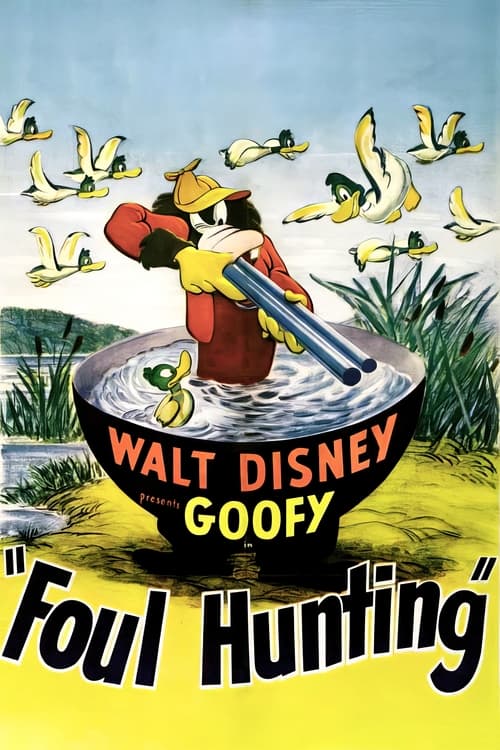
Foul Hunting
1947
No user ratings available yet
Representation score: 0.4 out of 10
No Poster Available
Representation Score
Minimal
1955
ApprovedDirector
Connie Rasinski
Runtime
7 minutes
Average Rating
No ratings yetNew Showbiz Analysis
Duck Fever is a traditional mid-century animated short that relies heavily on established comedic hierarchies. The narrative structure centers on a patriarchal figure attempting to prove his worth through hunting. The film does not make intentional efforts to represent progressive social issues or diverse identities. It operates as a straightforward slapstick comedy using animal metaphors that do not challenge the social norms of the 1950s. Overall, the production reflects the era’s preference for homogeneous settings and traditional family roles. It offers no complexity regarding race, gender, or LGBTQ+ identities, staying within a narrow, traditional framework.
Category Breakdown
The film focuses on a traditional family unit with Papa Bear, his cubs, and a hound dog. It does not include any depictions of LGBTQ+ identities or narratives.
The story revolves around a patriarchal hierarchy where Papa Bear serves as the main decision-maker. The humor arises from his struggles to assert authority through hunting.
The cast consists of anthropomorphic animals in a homogeneous wilderness setting. There is no indication of diverse casting or challenging Anglo-centric norms.
The narrative reinforces Western ideals of the provider and hunter through slapstick clichés. It portrays a typical family unit without delving into secular themes or institutional critiques.
No characters are shown with visible or invisible disabilities. The slapstick mishaps seem to be situational rather than exploring physical or neurodivergent traits.
Present on Screen
Limited or Absent
Official Synopsis
Papa Bear, his cubs and the Hound Dog go duck hunting and, as usual, the experts (Papa and the dog) have nothing but misadventures, while the amateur hunters bag all the ducks. When Papa returns home, empty-handed, angry and frustrated, he throws the ammunition into the fireplace, followed by a barrage of bullets firing upward through the chimney and bringing down a flock of ducks that were flying overhead.
1947
1932
1952
1948
1955
1949
1939
1947
No reviews yet. Be the first to share your thoughts on this movie!
Use the rating form above to leave a star rating and optional review.