Twilight Dinner
1998
No user ratings available yet
Representation score: 2.9 out of 10
Representation Score
Fair
1972
Director
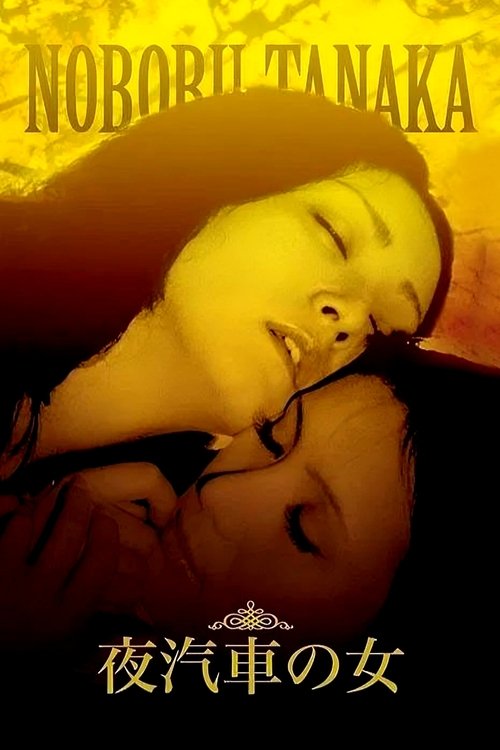
Noboru Tanaka
Runtime
71 minutes
Average Rating
No ratings yetNew Showbiz Analysis
Noboru Tanaka’s work provides a sophisticated look at the deconstruction of social stability. The film succeeds by allowing female characters to drive the narrative through their own complex, often destructive, psychological motivations. While the film excels in presenting a non-Western perspective and challenging traditional morality, it remains limited in its explicit representation of underrepresented identities. The focus remains heavily on psychological obsession rather than social critique. Ultimately, the film's strength lies in its refusal to adhere to conventional archetypes, offering a nuanced study of human impulse and the fragility of social structures.
Category Breakdown
The film explores intense emotional bonds between sisters but lacks explicit depictions of queer identities or non-straight relationships.
Female protagonists play a significant role in driving the narrative, focusing on Saeko's subjective desires and disrupting traditional hierarchies.
Set in a rural Japanese landscape, the film presents a culturally homogeneous cast. It avoids Western-centric clichés by offering a non-Anglo-Saxon perspective.
The story challenges the sanctity of traditional family units through Saeko's interference. It uses psychological realism to explore the breakdown of social and familial institutions.
There is no evidence of characters with visible or invisible disabilities being utilized as central plot devices or depicted with specific ability to act.
Present on Screen
Limited or Absent
Official Synopsis
Saeko is abnormally attached to her older sister, Yumi. When Yumi becomes engaged to Arikawa, Saeko schemes to separate the two. She seduces Arikawa who then becomes confused over his attraction to both sisters.
1998
1978
1972

1969

1973
1965

1972

1985
No reviews yet. Be the first to share your thoughts on this movie!
Use the rating form above to leave a star rating and optional review.