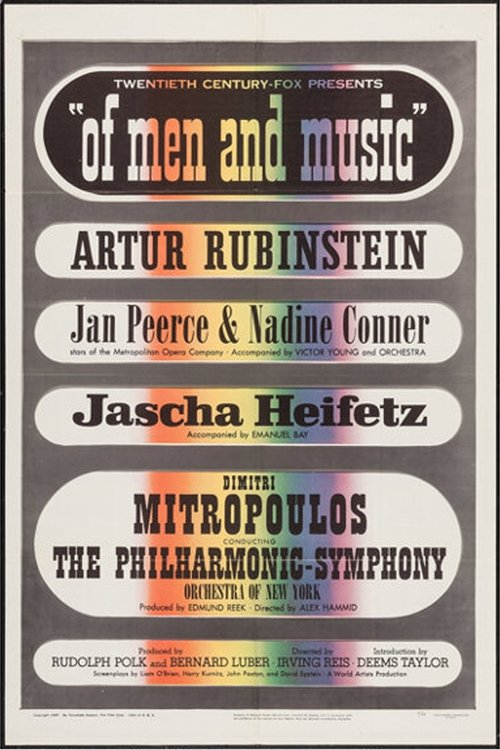
Of Men and Music
1951
No user ratings available yet
Representation score: 1.0 out of 10

Representation Score
Limited
1954
ApprovedDirector
Otto Lang
Runtime
10 minutes
Average Rating
No ratings yetNew Showbiz Analysis
The First Piano Quartette documents a musical ensemble through the lens of mid-century professional standards. While the musical selections introduce cultural variety, the film remains within traditional Western structures. The lack of diverse casting and the absence of non-men's control over the story limits its social impact. Ultimately, the documentary prioritizes musical proficiency over challenging social hierarchies or including multi-layered identities.
Category Breakdown
The film does not depict any LGBTQ+ identities. It focuses on the performances without including any queer subtext or non-straight narratives.
The cast is made up of four male musicians. This focus on male musicians reflects mid-century standards without offering a platform for female leadership.
The film introduces Afro-Cuban musicality but follows traditional casting practices of the 1950s.
The music includes both Western patriotic songs and cosmopolitan pieces. The film adheres to cultural norms of the time without challenging them.
No characters with disabilities are shown or used as plot devices in the musical performance.
Present on Screen
Limited or Absent
Official Synopsis
The First Piano Quartette is a 1954 short documentary film directed by Otto Lang. It shows the First Piano Quartette composed of Adan Garner, Edward Edson, Frank Mittler and Glauco D'Attilli as they play Lecuona's "Malaguena," Debussy's "Clair de Lune," and John Phillip Sousa's "The Stars and Stripes Forever." The film was nominated for an Oscar for Best Short Subject, One-Reel.
1951
2022

1936

1973
1954
1993

2000
2000
No reviews yet. Be the first to share your thoughts on this movie!
Use the rating form above to leave a star rating and optional review.