
Stormy Weather: The Music of Harold Arlen
2002
No user ratings available yet
Representation score: 5.7 out of 10
Representation Score
Minimal
1951
ApprovedDirector
Alexander Hammid, Irving Reis
Runtime
85 minutes
Average Rating
No ratings yetNew Showbiz Analysis
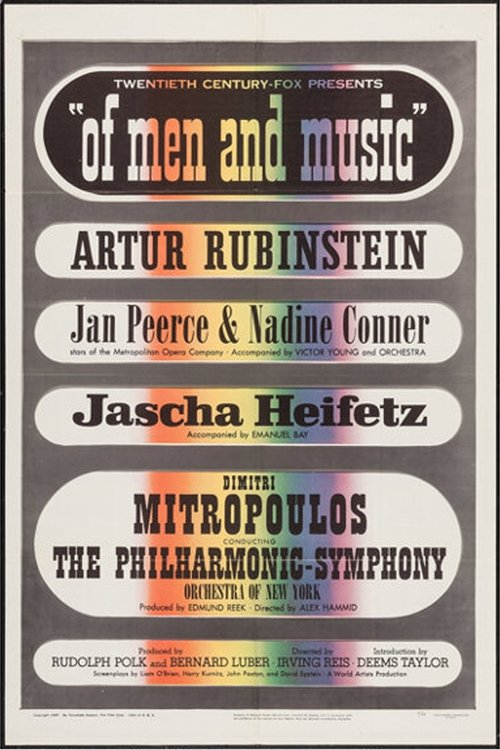
Of Men and Music is a mid-century documentary focused on preserving classical musical excellence. It highlights world-class international talent, emphasizing technical and aesthetic mastery through figures like Jascha Heifetz. However, the film’s narrative structure remains tied to the social hierarchies of 1951, prioritizing high-culture Western traditions over contemporary explorations of identity politics or the deconstruction of ethnic and social structures. While the talent is diverse, the presentation lacks a modern framework that considers multiple aspects of identity.
Category Breakdown
There are no LGBTQ+ characters or narratives that question the assumption that everyone is straight or cisgender.
The documentary includes notable female performers like Nadine Conner. However, gender roles still follow the traditional hierarchies typical of the 1950s.
The film showcases a multicultural cast, featuring talents such as Artur Rubinstein and Jascha Heifetz. However, it focuses more on technical mastery than on exploring racial identity.
The documentary celebrates the Western classical music tradition. It aligns with institutional norms rather than presenting a secular or anti-capitalist viewpoint.
There are no visible or invisible disabilities portrayed as central to the narrative. Disability is not used as a plot device.
Present on Screen
Limited or Absent
Official Synopsis
A documentary featuring musicians including Artur Rubinstein, Jan Peerce-Nadine Conner, and Jascha Heifetz.
2002
2015
1959
1994
2003
1985
2008

1939
No reviews yet. Be the first to share your thoughts on this movie!
Use the rating form above to leave a star rating and optional review.