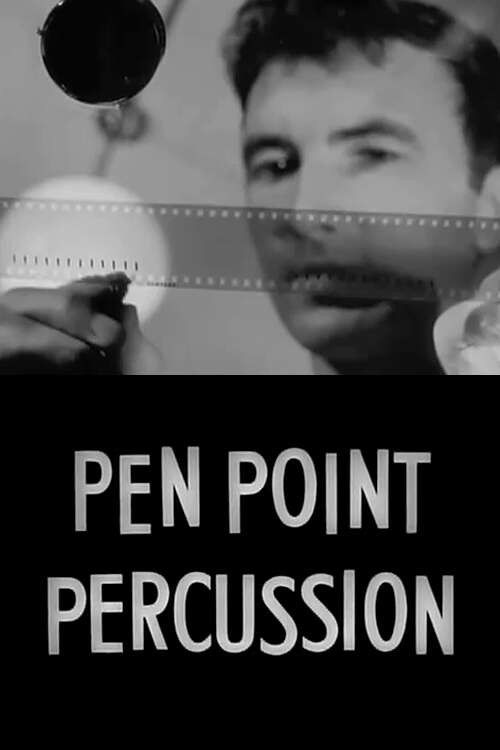
Pen Point Percussion
1951
No user ratings available yet
Representation score: 0.6 out of 10
No Poster Available
Representation Score
Minimal
1978
Director
Grant Munro, Norman McLaren
Runtime
7 minutes
Average Rating
No ratings yetNew Showbiz Analysis
Animated Motion: Part 5 is a work of pure abstraction that prioritizes formalist experimentation over social commentary. By isolating changes in light and color from traditional spatial motion, the film challenges the boundaries of the medium through a purely aesthetic lens. Since the film lacks characters, dialogue, or a social setting, it provides no platform for identity-based representation. It does not engage with gender, race, or sexual orientation, as its subject matter is entirely non-representational. While the work is a significant contribution to experimental cinema history, its value lies in its technical disruption of cinematic mechanics rather than its engagement with social hierarchies or multi-layered narratives.
Category Breakdown
The film is a non-narrative, formalist study of light and color. Since it lacks characters or dialogue, there is no depiction of sexual orientation or queer narratives.
The narrative structure focuses solely on the kinetic properties of light and shape. Without human figures, the film does not engage with gender hierarchies.
The work operates within a purely visual, non-representational framework. It lacks a cast or setting, and thus does not utilize racial or ethnic identifiers.
This film functions as a technical inquiry into light and motion. It does not engage with religious, political, or socioeconomic institutions or cultural structures.
There are no characters present to depict physical, sensory, or neurodivergent experiences. The focus remains strictly on the mechanics of animation.
Present on Screen
Limited or Absent
Official Synopsis
In this fifth part, Norman McLaren deals not with motion (if motion is defined as a change of location in two- or three-dimensional space) but with change--change in the amount and color of light within an otherwise static screen. Normally, the animator combines such change with motion, but here it is studied in isolation.
1951
2006
1973
1968

1962
1960
1973
1959
No reviews yet. Be the first to share your thoughts on this movie!
Use the rating form above to leave a star rating and optional review.