The Catnip Gang
1949
No user ratings available yet
Representation score: 0.9 out of 10
Representation Score
Minimal
1953
ApprovedDirector
Mannie Davis
Runtime
7 minutes
Average Rating
No ratings yetNew Showbiz Analysis
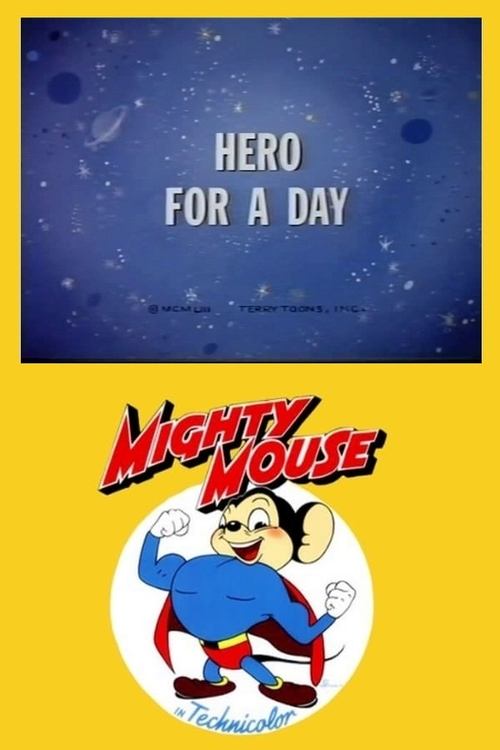
Hero for a Day is a product of its era, functioning as a standard mid-century animated comedy. It relies heavily on established social hierarchies and traditional narrative structures to drive its plot of jealousy and perceived heroism. The film lacks complexity, focusing instead on a homogeneous cast of mice. It adheres strictly to the period's standard formulas regarding gendered social roles and straight-centered romantic dynamics. Ultimately, the work provides a conventional character study that reinforces, rather than challenges, the status quo of the 1950s animation landscape.
Category Breakdown
The story centers on a traditional romance between Herky and Susie Mouse, with no queer identities or subtext present.
Gender roles follow 1950s clichés, where female mice act as passive rewards for male strength. Masculinity is defined by physical dominance and hero archetypes.
The cast consists entirely of anthropomorphic mice. There is no visible attempt to represent diverse human racial or ethnic identities.
The film reinforces Western storytelling archetypes like the hero and the damsel. It upholds a classic mid-century status quo without revisiting these themes.
No characters with visible or invisible disabilities are featured. The slapstick comedy focuses on physical mishaps rather than representing neurodivergence or impairment.
Present on Screen
Limited or Absent
Official Synopsis
Little Herky Mouse is jealous because his girlfriend, Little Susie Mouse, is smitten with Mighty Mouse. Herky goes into a store that sells Mighty-Mouse dolls, and helps himself to a Mighty Mouse costume, which he pads and fills out with some balloons. The cats chase him and deflate the balloons, but the real Mighty Mouse---the big red cheese, himself---shows up, beats up the cats and stacks them in a neat pile one on top of the other. Herky finds them that way when he comes to and Susie thinks he did it, although Herky says he didn't think he had it in him. Susie and the other little girl mice are fawning over Herky, as Mighty Mouse gives a big wink and flies away.
1949
1949
1957
1946
1948
1956
1950

1952
No reviews yet. Be the first to share your thoughts on this movie!
Use the rating form above to leave a star rating and optional review.