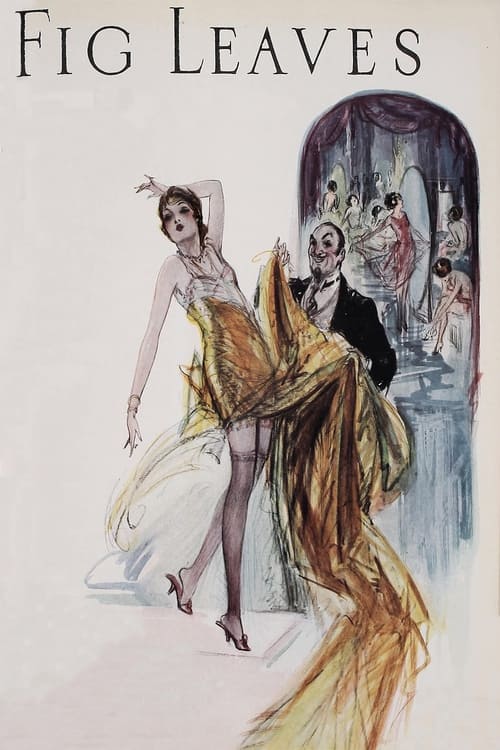
Fig Leaves
1926
No user ratings available yet
Representation score: 1.0 out of 10
Representation Score
Limited
1927
PassedDirector
Howard Hawks
Runtime
59 minutes
Average Rating
No ratings yetNew Showbiz Analysis
The film opens on a domestic crisis: three middle-aged wives, bored and betrayed, decide to teach their flirtatious husbands a lesson by hiring college boys to flirt with them. This premise, driven by Louise Fazenda’s sharp-tongued lead performance, inverts the typical 1920s gender dynamic where women are passive observers of male infidelity. Here, the women are the architects of chaos, using the "flapper" era’s new sexual freedom as a weapon to restore marital order. The camera favors the wives’ wit and coordination, treating their deception as a justified, even admirable, response to male restlessness. The sold meaning is that female agency is the corrective to male folly. The husbands, played by bumbling character actors, are the joke; their incompetence and infidelity are the source of the film’s humor, not the wives’ manipulation. The "Spaniard" gag and the college boys’ antics serve as props for the wives’ plan, never threatening the central female trio. The film’s argument is that the traditional marriage is fragile but repairable through female initiative, not male reform. The ending, though partially lost, likely restores the status quo, with the husbands humbled and the wives satisfied. This resolution treats the nuclear family as the ultimate good, even as the film’s internal logic celebrates the wives’ temporary subversion of it. The tension between the film’s progressive framing (women in control) and its traditional conclusion (family restored) is the core of its 1927 cultural position. It does not challenge the institution of marriage but rather reasserts it through female power. The last image, if it follows the stage play’s logic, would show the wives and husbands reconciled, with the wives’ competence acknowledged but the domestic hierarchy intact. The film is a conservative comedy that uses progressive tactics to defend a traditional end.
Category Breakdown
The narrative remains strictly heterosexual, focusing on marital infidelity and opposite-sex pairings. No same-sex intimacy, queer identity, or non-binary presentation appears in the surviving footage or credited cast.
The wives orchestrate the plot, using college-aged men to punish their flirtatious husbands. Louise Fazenda anchors the comedy, positioning female agency as the solution to male restlessness while the husbands serve as bumbling targets.
The cast is entirely white, reflecting standard 1927 studio demographics. One male character adopts a hot-blooded Spaniard persona for comic effect, reducing ethnicity to a costume-based gag rather than a lived experience.
The film treats traditional marriage as a site of friction, with wives subverting domestic expectations to regain control. The resolution likely restores the nuclear family, framing the wives’ rebellion as a temporary corrective rather than permanent structural change.
No characters are depicted with physical, sensory, or cognitive disabilities. The comedy relies on physical agility and social maneuvering, with no impairment serving as a plot device or character trait.
Present on Screen
Limited or Absent
Official Synopsis
To cure their flirtatious husbands of consorting with flappers, three wives-- Susan Martin, Ethel Drake, and Kitty Ladd-- arrange with three college boys-- Henry Winton, Oscar, and Joe Valley-- to flirt with them at a house party. Joe Valley, who poses as a hot-blooded Spaniard, is vamped by Ginsberg in female attire, and Oscar, a bashful Swede, uses caveman methods when aroused. During a rehearsal of the party, the three husbands arrive, followed by their flapper friends, leading to comic complications.
1926
1928
1931
1927
1935
1927
1937
1934
No reviews yet. Be the first to share your thoughts on this movie!
Use the rating form above to leave a star rating and optional review.