
Greyhound
2020
No user ratings available yet
Representation score: 0.3 out of 10
Representation Score
Minimal
2017
PG-13Director
Christopher Nolan
Runtime
107 minutes
Average Rating
No ratings yetNew Showbiz Analysis
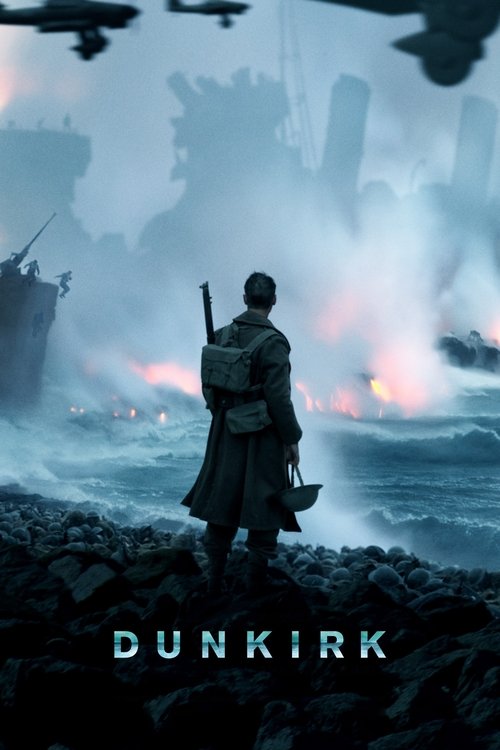
Dunkirk presents the 1940 evacuation as a testament to collective male endurance and national duty. The film argues that survival is achieved through stoicism, hierarchy, and the willingness of civilians to risk their lives for the state. It frames the British military and the home front as morally upright and competent, with the enemy rendered abstract to focus on the internal experience of fear and resolve. The narrative upholds traditional values of patriotism, service, and masculine resilience without questioning the war’s broader political context or the exclusion of women and non-white individuals from the visible story.
Category Breakdown
No LGBTQ+ characters, same-sex romance, or gender-nonconforming identities appear on screen. All relationships are strictly platonic, fraternal, or hierarchical between male soldiers, civilians, and officers. The narrative focuses entirely on survival and duty without exploring sexual orientation or gender identity.
Women are entirely absent from the visual narrative; no female soldiers, nurses, or civilians appear on screen. The plot is driven exclusively by men, who serve as the sole moral and physical center of the story. The only female presence is an off-screen radio voice in the final voiceover, leaving all on-screen agency and competence to the male cast.
The cast is exclusively white, reflecting the specific historical context of the British and French forces in 1940. No non-white characters appear in the main narrative or background crowds. The film presents a homogeneous world where racial identity is not a factor in the survival dynamics or character interactions.
Patriotism, military duty, and national survival are treated as unquestioned virtues and the primary moral framework. The British and French alliance is portrayed with dignity, and the evacuation is framed as a noble, necessary act of state. Traditional institutions like the military and the navy are depicted as competent and heroic, with no critique of their structures or the war itself.
Physical injury and shell shock are depicted as temporary war wounds rather than lasting disabilities. A soldier suffers a severe head injury and another experiences trauma, but these are framed as acute combat stressors that do not define their long-term identity. The film does not explore disability as a lived experience or social condition, focusing instead on immediate physical survival.
Present on Screen
Limited or Absent
Official Synopsis
The story of the miraculous evacuation of Allied soldiers from Belgium, Britain, Canada and France, who were cut off and surrounded by the German army from the beaches and harbour of Dunkirk between May 26th and June 4th 1940 during World War II.
2020
1969

2006
1955

2020

1962
1998

1964
No reviews yet. Be the first to share your thoughts on this movie!
Use the rating form above to leave a star rating and optional review.