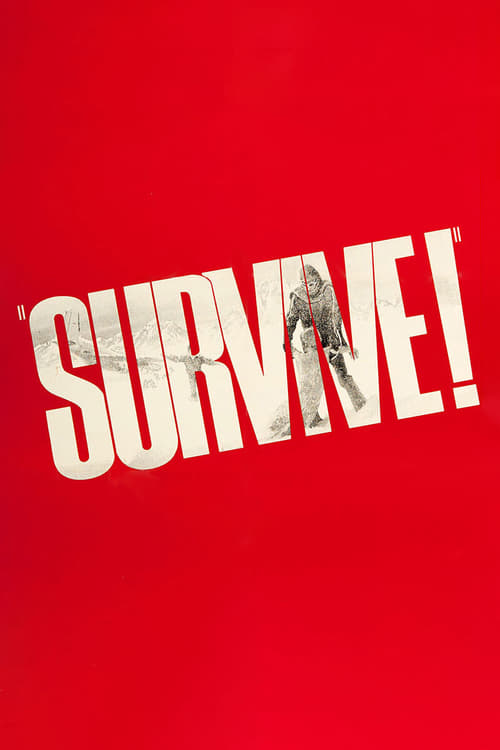
Survive!
1976
No user ratings available yet
Representation score: 2.2 out of 10

Representation Score
Limited
1969
GDirector
Jamie Uys
Runtime
84 minutes
Average Rating
No ratings yetNew Showbiz Analysis
Dirkie is a survivalist adventure that adheres to the traditional 'man vs. nature' clichés of its era. The story is driven by a singular male child and a canine companion navigating a desert wasteland after a plane crash. The film lacks multi-layered complexity, focusing instead on a conventional pursuit by an organized army. This creates a narrative centered on traditional masculine archetypes and institutional power. Because the film lacks diverse character roles or systemic critique, it remains a product of its time, reflecting the homogeneous storytelling common in 1969.
Category Breakdown
The story focuses on a young boy and his dog in a desert setting. There are no queer identities or narratives that challenge the assumption that everyone is straight or cisgender.
The story centers on a male protagonist and an army of men. This structure relies on traditional masculine archetypes of survival and pursuit without giving much depth to female characters.
The film lacks information regarding the racial makeup of the cast. Given the 1969 production era, the narrative likely follows a homogeneous casting pattern.
The plot follows a standard search-and-rescue mission within a desert wasteland. It appears to rely on established institutional structures rather than offering cultural critique.
The available information provides no details regarding characters with visible or invisible disabilities.
Present on Screen
Limited or Absent
Official Synopsis
An 8-year-old boy and his dog are left to face a vast desert wasteland alone after a plane crash, while an army of men and machines penetrate the desert searching for them. Based on true events.
1976
1971

1993

1958

1964

1965

1953
1987
No reviews yet. Be the first to share your thoughts on this movie!
Use the rating form above to leave a star rating and optional review.