G.I. Pink
1968
No user ratings available yet
Representation score: 3.5 out of 10
Representation Score
Limited
1961
Director
Gene Deitch
Runtime
9 minutes
Average Rating
No ratings yetNew Showbiz Analysis
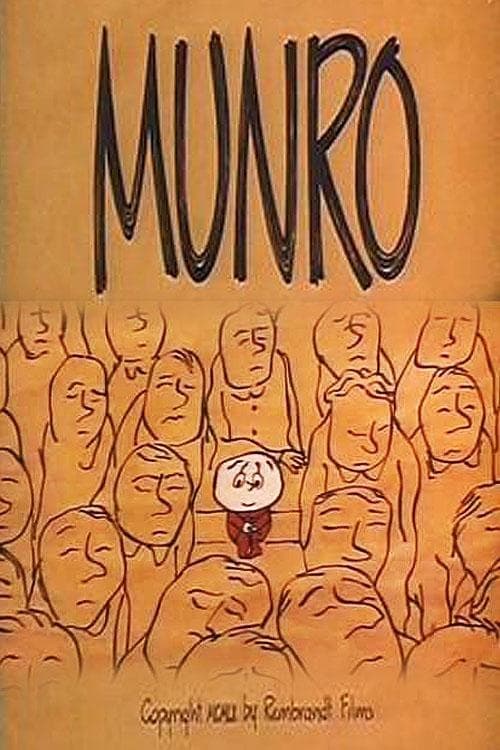
Munro is a mid-century animated short that operates within the social constraints of its 1961 production era. The narrative focuses on the absurdity of a four-year-old being drafted into the army, serving as a surreal commentary on institutional authority. However, the film lacks depth in representing diverse identities. The focus on a male child in a military context results in a narrow demographic scope. The production follows the standard, homogeneous casting norms of the period, offering little in the way of racial or gender diversity. While the concept of a child soldier provides a unique lens to view military systems, the work remains a product of its time, lacking modern inclusive representation.
Category Breakdown
The film lacks explicit LGBTQ+ characters or themes. The wartime setting focuses on a traditional narrative structure that offers no representation of non-straight relationships.
The story centers on a male child within a military framework. It does not provide evidence of diverse gender identities or a challenge to traditional gender roles.
The film likely reflects the homogeneous casting patterns typical of 1961 Western animation. There is no indication of diverse racial or ethnic character designs.
The premise critiques institutional authority by placing a toddler in a rigid military structure. It remains unclear if this serves as a profound social critique.
There is no evidence of characters with physical or neurodivergent disabilities. The narrative does not address disability representation.
Present on Screen
Limited or Absent
Official Synopsis
A four-year-old boy is drafted into the army.
1968
1953

1965
1962
1946
1941
1962
1941
No reviews yet. Be the first to share your thoughts on this movie!
Use the rating form above to leave a star rating and optional review.