
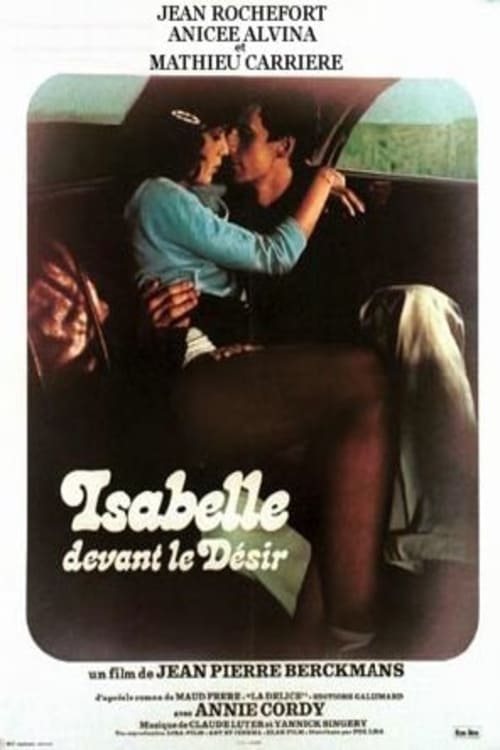
The Insatiable
1971
No user ratings available yet
Representation score: 5.0 out of 10
Representation Score
Good
1975
Director
Jean-Pierre Berckmans
Runtime
90 minutes
Average Rating
No ratings yetNew Showbiz Analysis
Isabelle and Lust provides a sophisticated, character-driven study of women's ability to drive the story and psychological depth. By centering on a woman navigating profound trauma, the film avoids traditional, reductive depictions of female characters. However, the film lacks breadth in its social representation. The narrative remains confined to a largely homogeneous Western social structure, offering little visibility for LGBTQ+ identities or diverse racial backgrounds. Ultimately, the film's strength lies in its deconstruction of moral and institutional stability, even if it fails to engage with a wider spectrum of human identity.
Category Breakdown
The film focuses on heterosexual relationships and the search for male companionship. There is no visible evidence of queer dynamics or non-cisgender identities.
The film centers on a female protagonist named Isabelle, whose psychological complexity and trauma drive the plot. She is portrayed with ability to act, navigating systemic violence rather than acting as a passive domestic figure.
Set in post-WWII Europe, the film features a predominantly white, Western cast. While a German character introduces ethnic tension, the social structure remains largely homogeneous.
The story critiques traditional institutions by highlighting the fragility of the nuclear family and state structures. It explores a subjective morality shaped by historical trauma and occupation.
The film addresses invisible disability through Isabelle's psychological trauma and mental instability. Her lack of mental balance serves as a central, driving force within the narrative.
Present on Screen
Limited or Absent
Official Synopsis
In the early 1950s, in a seaside town, Isabelle, a girl in her late teens,is about to spend an apparently eventless summer between her mother, her friends and a small job for a photographer whose business is lagging. But Isabelle is not the mentally balanced young lady she seems to be. In fact she is doubly traumatized, firstly by the rape she suffered eight years before from a Nazi officer and secondly by the suicide of her father shortly after. What she wants deep inside herself is to find a man, young or less young, who will bring her tenderness and happiness. Will Luc, a young German, or Monsieur Vaudois, her married boss, give her what she lacks ?
1971
1987

1971
1967

1972
1977

1978

1983
No reviews yet. Be the first to share your thoughts on this movie!
Use the rating form above to leave a star rating and optional review.