
White Marble
1998
No user ratings available yet
Representation score: 5.9 out of 10
Representation Score
Fair
1996
Director
Vladimir Naumov
Runtime
102 minutes
Average Rating
No ratings yetNew Showbiz Analysis
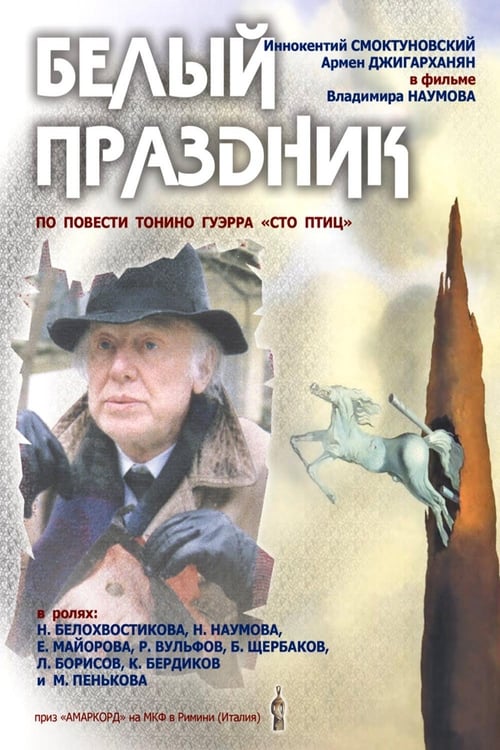
White Feast is an existentialist drama that prioritizes psychological depth over broad social representation. It deconstructs traditional family roles by presenting a fractured domestic unit rather than a stable one. However, the film remains limited in its scope, lacking significant racial or LGBTQ+ diversity. It focuses on a localized, likely homogenous demographic and stays within a traditional straight-centered framework. Ultimately, the film's strength lies in its moral complexity, using a terminal diagnosis and surrealism to challenge social respectability, despite its narrow focus on identity-based representation.
Category Breakdown
The film does not include any explicit LGBTQ+ characters or non-straight relationships. The story revolves around a male protagonist and his interactions with women, reinforcing traditional heterosexual norms.
The movie centers on a male protagonist but is driven by female archetypes. The portrayal of a daughter working as a prostitute challenges the stability of the traditional patriarchal family structure.
The story seems to be a localized, character-focused drama without a multi-ethnic cast or exploration of racial diversity.
The film explores subjective morality through surrealism and existential inquiry. It critiques idealized family structures by portraying them as fragmented and morally ambiguous.
The protagonist faces a terminal illness, focusing on the psychological implications of mortality. It does not explore disability rights or neurodivergence specifically.
Present on Screen
Limited or Absent
Official Synopsis
Knowing that he will soon pass on, elderly Valentin Grack hires private detective Stanislav to follow him around for an entire day and write down everything that he does. It is a cold day and during Grack's travels he encounters a younger woman who addresses him as professor. He then meets a prostitute who turns out to be his daughter, and finally he meets an old woman, his worried wife who has been searching eight days for him. In between meeting the women, Grack finds himself in some almost surreal situations and having flashbacks about his youth.
1998
1976

1957
1985
2007

1999

2010
1997
No reviews yet. Be the first to share your thoughts on this movie!
Use the rating form above to leave a star rating and optional review.