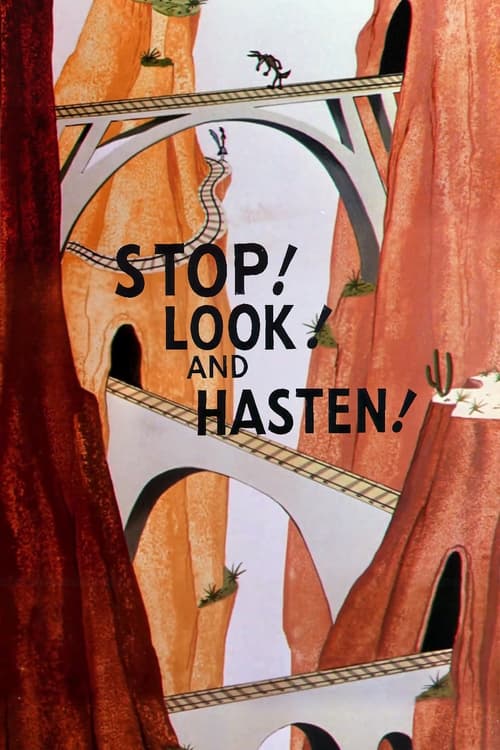
Stop! Look! and Hasten!
1954
No user ratings available yet
Diversity score: 2.4 out of 10

1963
GDirector
Chuck Jones
Runtime
6 minutes
Average Rating
No ratings yetSynopsis
In this surreal cartoon that plays with the idea of sound effects, a near-deaf old man finds one of the devil's lost horns and tries to use it as an ear trumpet.
Overall Score
Limited
Category Breakdown
LGBTQ+ Representation
The film focuses on a singular male character and a mythological object. There is no evidence of queer themes or non-heteronormative identities.
Gender Representation
The narrative centers on an elderly man, reinforcing a traditional male-centric protagonist model. It lacks female characters or the subversion of gender hierarchies.
Racial & Ethnic Diversity
The story features a singular character in a surrealist setting. There is no indication of a diverse cast or varied ethnic perspectives.
Religious & Cultural Diversity
The film utilizes folkloric tropes like the devil's horn. However, it does not explicitly critique Western institutions or socio-political frameworks.
Disability Representation
The protagonist deals with a hearing impairment. While he shows agency, the use of a magical horn as a prosthetic leans toward comedic surrealism rather than nuanced representation.
Strengths
Areas for Improvement
AI Analysis
Chuck Jones's short is a surrealist character study that prioritizes a fantastical premise over demographic breadth. The narrative is tightly focused on a single elderly man interacting with a supernatural object, which limits the opportunity for intersectional storytelling. While the film addresses physical impairment, it treats the disability through the lens of magical realism and comedy. This approach favors slapstick and myth over a meaningful or realistic portrayal of sensory deficits. Ultimately, the work reflects the traditional, narrow character archetypes common in mid-century animation. It lacks the diverse cast and systemic critique necessary for a higher diversity rating.
1954
1949
1949
1965
1965
1954
1955
1954

1964
1965
1966
1960
No reviews yet. Be the first to share your thoughts on this movie!
Use the rating form above to leave a star rating and optional review.