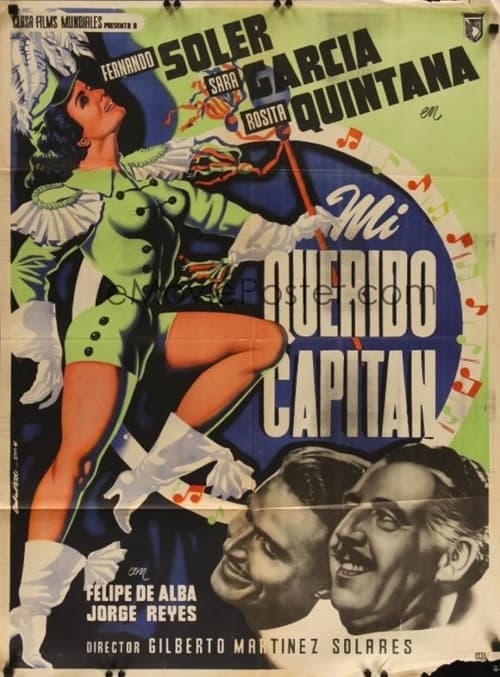
My Dear Captain
1950
No user ratings available yet
Representation score: 4.0 out of 10
Representation Score
Minimal
1950
Director
Edgar Neville
Runtime
85 minutes
Average Rating
No ratings yetNew Showbiz Analysis
The film is a character-driven study set in 1950s Spain, reflecting the social norms and demographic homogeneity of the time. It prioritizes a traditional narrative structure over diverse representation. Edgar Neville's direction provides a sophisticated exploration of social norms, yet the themes remain anchored in mid-century dramatic conventions. The conflict centers on the struggle to balance past traditions with a rapidly modernizing urban environment. Ultimately, the film serves as a reflection of its era, highlighting the challenges of reconciling traditional values with the changes brought by urbanization.
Category Breakdown
The film does not include any characters with non-binary gender identities or same-sex relationships. The story focuses solely on the protagonist's bond with his horse and his move to the city.
The narrative centers around a traditional male journey, following a veteran transitioning back to civilian life. Female characters do not play significant roles or challenge gender hierarchies.
The setting and production context suggest a predominantly white and homogeneous demographic. There is no indication of racial diversity or non-white actors in the cast.
The film explores the tension between traditional cultural values and the encroachment of modernity. It portrays the changing city as a force that makes older ways of life obsolete.
There is no evidence of characters with visible or invisible disabilities playing central roles or serving as key narrative devices.
Present on Screen
Limited or Absent
Official Synopsis
Fernando has just finished the military service. It decides to buy Bucéfalo, the horse that has been his partner for this time and returns to Madrid removing with it to the animal. But everything has changed, the city already neither is the same and even he nor finds stables nor has time to attend to it. This way the things remedy will not have any more that to look for any solution.
1950
1992
1959
1945
1962

1971
1953

1955
No reviews yet. Be the first to share your thoughts on this movie!
Use the rating form above to leave a star rating and optional review.