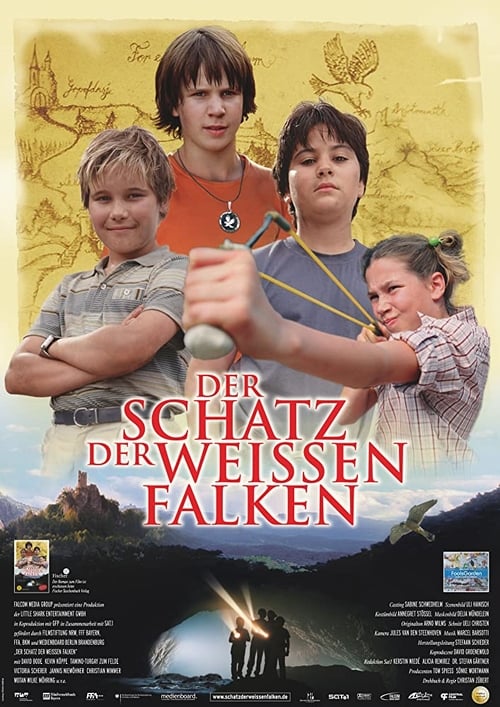
The Treasure of the White Falcons
2005
No user ratings available yet
Diversity score: 3.8 out of 10

1978
Director
Oleksii Moroz, Yuli Slupsky
Runtime
69 minutes
Average Rating
No ratings yetSynopsis
Two friends are helping the wounded Red Army officer hiding from Whites.
Overall Score
Limited
Category Breakdown
LGBTQ+ Representation
The film lacks LGBTQ+ characters or narratives. The adventure genre and revolutionary setting focus on traditional archetypes that exclude non-cisnormative identities.
Gender Representation
The story centers on masculine agency through a Red Army officer and his friends. It follows traditional hierarchies without subverting gender roles.
Racial & Ethnic Diversity
The narrative likely reflects a Slavic-centric revolutionary identity common to the era. It lacks evidence of intentional racial blending or diverse casting.
Religious & Cultural Diversity
The film promotes state-sanctioned Soviet morality and collective duty. It emphasizes historical materialism rather than secularism or the deconstruction of authority.
Disability Representation
There is no evidence of meaningful disability representation. A wounded officer is used as a plot device for tension rather than exploring disability agency.
Strengths
Areas for Improvement
AI Analysis
R.V.S. is a product of the late 1970s Soviet cinematic framework, prioritizing collective revolutionary struggle over individual identity. The narrative structure is built around historical archetypes that favor masculine leadership and state-sanctioned morality. The film adheres strictly to the sociopolitical norms of its era. It functions as a traditional historical adventure that emphasizes duty and the legitimacy of the Red Army rather than exploring intersectional perspectives. Because the film focuses on a specific ideological tradition, it lacks the diversity of representation found in modern cinema, offering a homogeneous view of the Russian Civil War period.
2005
1979

2009

2011
1966
2012
1971
1979
1973
1937
1970
1952
No reviews yet. Be the first to share your thoughts on this movie!
Use the rating form above to leave a star rating and optional review.