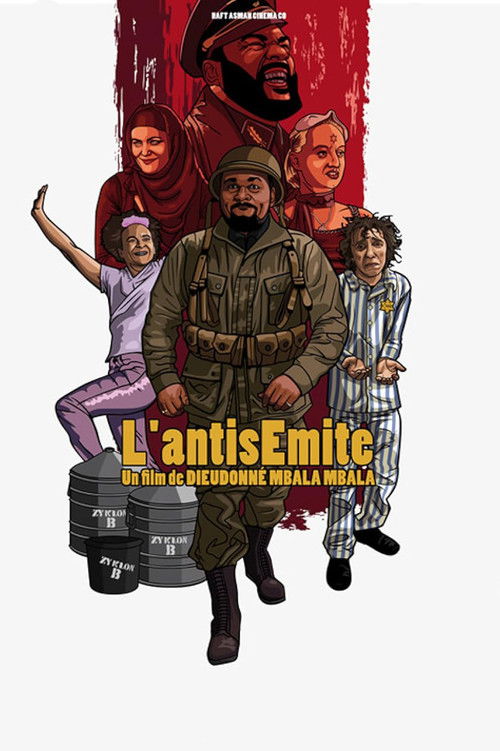
L'Antisémite
2012
No user ratings available yet
Representation score: 7.0 out of 10

Representation Score
Fair
1993
Director
Pascal Légitimus
Average Rating
No ratings yetNew Showbiz Analysis
The film is a purposeful piece of social satire that leverages the 'odd couple' cliché to confront systemic prejudice. By placing a Jewish comedian and a Cameroonian comedian at the center, it moves beyond including someone from a minority group without giving them real depth to make identity the primary engine of its social critique. While the film is highly effective in its racial and cultural commentary, it lacks breadth in other areas of representation. The focus is narrow, prioritizing ethnic and religious friction over gender or LGBTQ+ dynamics. Ultimately, the work serves as a notable example of early-90s comedic subversion, using humor to interrogate the flaws of French social integration and national identity.
Category Breakdown
The film does not include any visible LGBTQ+ characters or narratives addressing non-assuming gender matches what was assigned at birth identities. The storytelling focuses on ethnic and religious themes.
The narrative centers on a male comedic duo without addressing gender hierarchies. There is no evidence of a critique regarding masculinity or gender-based power structures.
The film excels by centering Jewish and Cameroonian identities. This approach disrupts Eurocentric homogeneity and uses these contrasting backgrounds to drive a sharp critique of racism.
The work uses unfiltered humor to challenge French societal norms and institutional flaws. It promotes a pluralistic perspective by deconstructing traditional nationalistic ideals.
There is no information available regarding the portrayal of physical or neurodivergent disabilities within the film.
Present on Screen
Limited or Absent
Official Synopsis
The two comedians played on their contrasting backgrounds, one Jewish, one Cameroonian, to take on racism and the flaws of French society with sharp, unfiltered humor.
2012

2020
1987

2016
2005

2024

1996
1994
No reviews yet. Be the first to share your thoughts on this movie!
Use the rating form above to leave a star rating and optional review.