
Rumble Fish
1983
No user ratings available yet
Representation score: 2.3 out of 10
Representation Score
Fair
1983
PGDirector
Francis Ford Coppola
Runtime
91 minutes
Average Rating
No ratings yetNew Showbiz Analysis
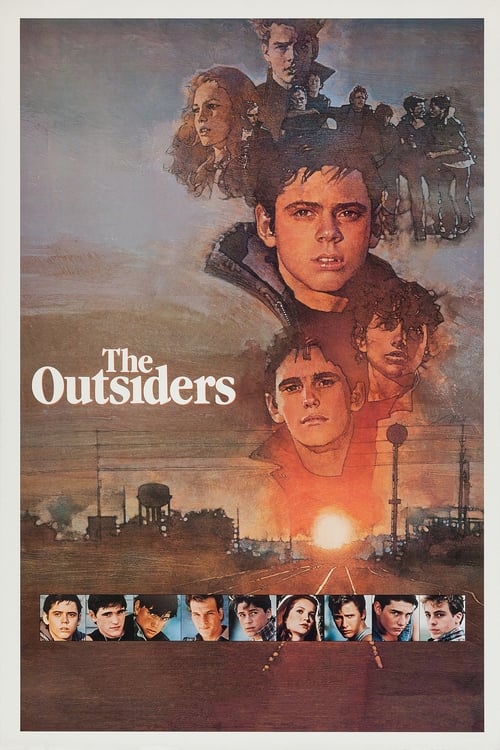
The Outsiders is a character-driven study of systemic social stratification. While it lacks diversity in traditional demographic categories like race, gender, and LGBTQ+ identity, it excels in its sophisticated exploration of class-based power dynamics. The film's strength lies in its anti-capitalist subtext and its deconstruction of the 'haves' versus 'have-nots.' It effectively uses the Greasers to highlight how economic status dictates social exclusion and survival. Ultimately, the film prioritizes the friction of class warfare over demographic variety, making it a powerful critique of social institutions despite its narrow representation of identity groups.
Category Breakdown
The film emphasizes strong bonds among male characters and their emotional connections. It doesn't show diverse LGBTQ+ identities or romantic relationships involving non-cisgender individuals.
The story follows a traditional masculine framework focused on toughness and stoicism. Female characters such as Cherry Valance mainly observe or influence male development.
The cast is mostly uniform, reflecting the social norms of 1960s Tulsa. Conflicts arise from socioeconomic differences rather than racial or ethnic distinctions.
The film sharply critiques social hierarchies and systemic privilege. It portrays authority figures as disconnected, highlighting the Greasers' struggle against inequality.
There is no significant focus on neurodivergence or physical disabilities. Characters face social and physical traumas rather than living with disabilities.
Present on Screen
Limited or Absent
Official Synopsis
In 1960s Tulsa, class divisions ignite a violent rivalry between the working-class Greasers and the privileged Socs. When a deadly encounter forces two Greasers, Ponyboy and Johnny, to flee, their struggle for survival and redemption exposes the fragile innocence and enduring bonds of youth on the wrong side of town.
1983
1983

2001

1979
1961

1979

1973

1979
No reviews yet. Be the first to share your thoughts on this movie!
Use the rating form above to leave a star rating and optional review.