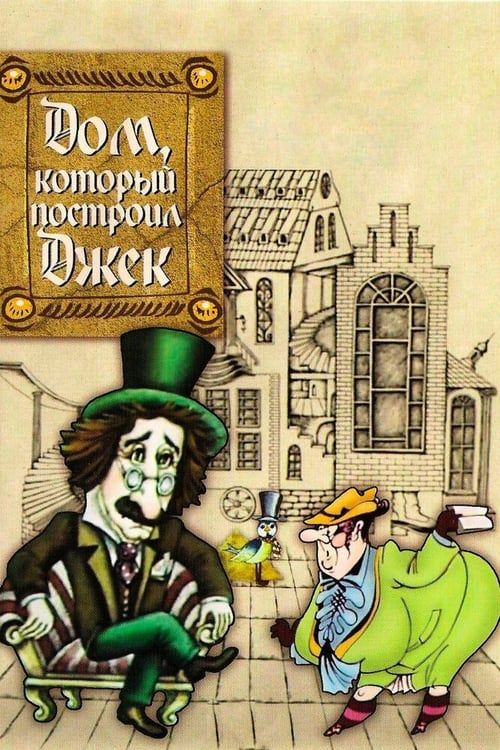
The House That Jack Built
1976
No user ratings available yet
Representation score: 5.5 out of 10
Representation Score
Fair
1999
NRDirector
Mo Willems
Runtime
6 minutes
Average Rating
No ratings yetNew Showbiz Analysis
Life (1999) focuses on power dynamics rather than character development. Using a relay-style structure by thirty-three animators, it avoids traditional hero-villain binaries in favor of shifting hierarchies. The film scores well by rejecting traditional social hierarchies. It presents a chaotic, decentralized ecosystem where control is temporary and power shifts frequently. While it doesn't depict specific human social identities, it offers a unique perspective on systemic instability through a naturalistic worldview.
Category Breakdown
The film doesn't show romantic orientation or gender identity explicitly. However, it avoids stereotypes about straight relationships by focusing on biological and mechanical processes.
The film removes gendered roles, breaking down traditional hierarchies. It features animals, aliens, and robots without reinforcing masculine dominance or feminine subservience.
The film uses a species-blind approach to casting. A variety of entities, from earthly creatures to extraterrestrial beings, challenge the idea of a uniform norm.
The film critiques Western structures by presenting existence as a cycle of consumption. It offers a worldview based on naturalism rather than singular religious or moralistic beliefs.
The film doesn't include characters with physical or neurodivergent disabilities. The focus remains on the cycle of predation.
Present on Screen
Limited or Absent
Official Synopsis
In life, the big fish eats the little fish, and the bigger fish eats the big fish. To illustrate this basic truth, thirty-three animators each introduce a character who eats the one previously introduced and is eaten by the next animator's creation. It happens on land and at sea, with humans, animals real and imaginary, aliens, a few plants, and a robot. They are chomped whole, sliced, smashed, flattened, inhaled through straws, eaten from the inside out and the backside forward. Sometimes the little guy wins; nothing and no one is invincible. By the end, we've come full circle.
1976
1988
1977

1994

1980
2011
1974
2001
No reviews yet. Be the first to share your thoughts on this movie!
Use the rating form above to leave a star rating and optional review.