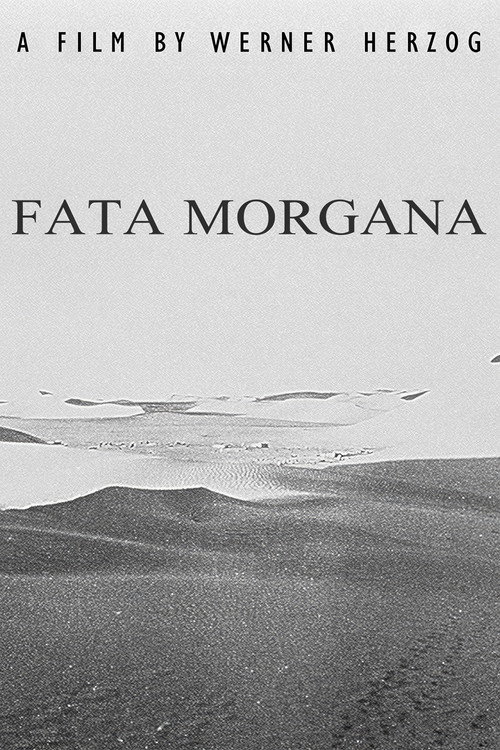
Fata Morgana
1972
No user ratings available yet
Representation score: 3.8 out of 10
Representation Score
Limited
1979
Director
Bill Viola
Runtime
28 minutes
Average Rating
No ratings yetNew Showbiz Analysis
Bill Viola’s experimental documentary shifts the focus from human characters to the elemental physics of the Tunisian desert. By rejecting linear storytelling, the film avoids traditional identity, gender, or social ability to act clichés. Its primary contribution to diversity lies in its geographic focus. By centering a North African landscape, it disrupts the Western gaze that often treats non-Western environments as mere backdrops for colonial narratives. Ultimately, the film is a study of perception rather than social commentary. It succeeds in providing a non-Western environmental perspective, even while remaining neutral on human-centric social issues.
Category Breakdown
The film doesn't include any character-driven romantic or identity-based stories related to LGBTQ+ individuals. Since it's an experimental documentary, there's no direct representation of LGBTQ+ characters.
The film operates outside traditional gender hierarchies by avoiding character-driven plots. It remains neutral, neither reinforcing nor actively challenging traditional gender roles.
By focusing on the Tunisian Chott el-Djerid, the film provides a significant departure from Western-centric landscapes. The emphasis on North African geography offers a non-Anglo-Saxon perspective on the environment.
The film prioritizes personal experience over structured religious or nationalistic morality. It presents a secular, elemental spirituality where traditional structures of time and order dissolve.
The film does not feature human characters with discernible disabilities. The focus remains entirely on the sensory experience of light and heat.
Present on Screen
Limited or Absent
Official Synopsis
Driven by a quest to capture a landscape reduced to flatness and sky, Viola travels to Chott El-Djerid. The film opens with images of snowy prairies and winter scenes, mirrored by warm, vibrating desert vistas. Through powerful telephoto lenses, shimmering mirages and warped forms emerge under extreme heat and light. These visuals evoke a space where dream and waking reality merge. Viola’s journey transcends documentation, transforming viewing into a reflective exploration of the limits of perception.
1972

1983
1970

1992
2009
1992
1966
2012
No reviews yet. Be the first to share your thoughts on this movie!
Use the rating form above to leave a star rating and optional review.