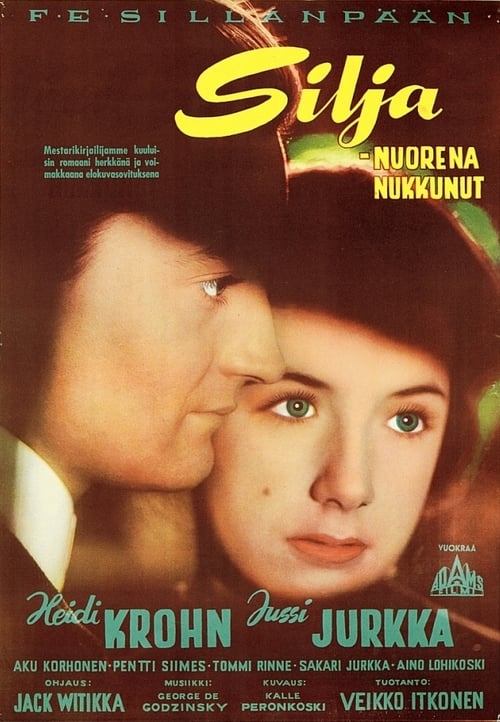
Silja – nuorena nukkunut
1956
No user ratings available yet
Representation score: 3.5 out of 10

Representation Score
Limited
1931
K-16Director
Kalle Kaarna
Runtime
101 minutes
Average Rating
No ratings yetNew Showbiz Analysis
Jääkärin morsian is a period drama reflecting the socio-political anxieties of 1915. While it includes ethnic characters like Isaac to avoid total homogeneity, the narrative remains tied to traditional gender roles and nationalist themes. The film's complexity comes from the intersection of espionage and personal exploitation, yet it reinforces rather than challenges the conventional social hierarchies of the time.
Category Breakdown
The film does not include any LGBTQ+ characters or non-straight identities. The story revolves around traditional romantic and military dynamics typical of the early 20th century.
Sonja Strand plays a significant role as a business owner involved in espionage. However, her story is shaped by exploitation and her relationships with men within patriarchal structures.
Isaac, a Jewish messenger, adds ethnic complexity to the plot. His presence disrupts a purely homogeneous narrative for a 1931 production.
The story is deeply rooted in early 20th-century nationalism and geopolitical tensions. It operates within established frameworks of class hierarchy and military service.
There are no visible or mentioned depictions of physical or neurodivergent disabilities in the film.
Present on Screen
Limited or Absent
Official Synopsis
It is the year 1915, and five Finnish men ski to Sweden via the Gulf of Bothnia to get military training in Germany. Among the men are Martti and Kalpa from the 27th Army Ranger Battalion. In the reserve, the troops spend their free time in a café called the Golden Anchor, owned by Sonja Strand. Sonja's captain serves in the Russian army, and Sonja has a relationship with Baron von Lichtenstein, who exploits Sonja who spies on Russia using Jew Isaac as her messenger.
1956

2002

1933

2021
1930

1931

1939

1929
No reviews yet. Be the first to share your thoughts on this movie!
Use the rating form above to leave a star rating and optional review.