Imagens
1972
No user ratings available yet
Representation score: 8.2 out of 10
Representation Score
Limited
1993
Director
Alain Cavalier
Runtime
75 minutes
Average Rating
No ratings yetNew Showbiz Analysis
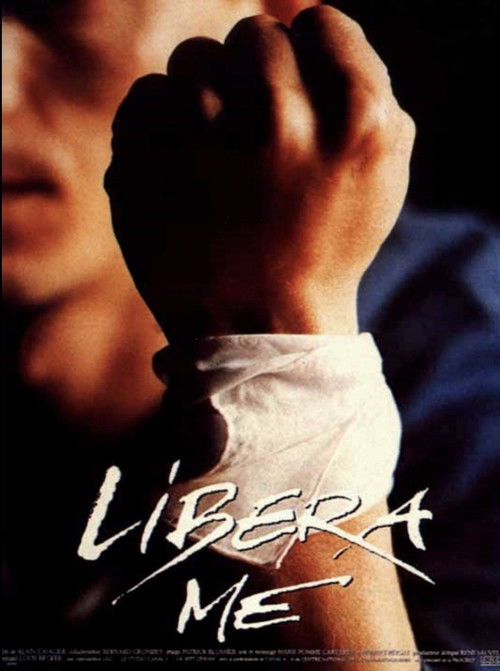
Alain Cavalier’s *Libera me* is a formalist exercise that prioritizes sensory experience over dialogue. While it succeeds as a stylistic meditation on mortality, its narrative structure remains deeply traditional. The film relies on conventional psychological archetypes, particularly regarding gender and desire. The central tension is built upon a voyeuristic, straight-centered gaze that reinforces rather than challenges historical power dynamics. Ultimately, the work is a period-specific character study. It lacks engagement with progressive multi-layered frameworks, remaining rooted in a homogeneous European landscape and traditional social structures.
Category Breakdown
The film does not include explicit LGBTQ+ identities or narratives. It focuses on a young boy's fascination with a woman, following traditional archetypes of desire.
The film features a significant power imbalance through a voyeuristic male gaze directed at a female figure. Although the woman has an ethereal presence, she mainly serves as an object of male preoccupation.
Set in 1930s France, the cast is predominantly white and European. The film does not attempt to disrupt this homogeneous norm through diverse casting.
The film uses religious motifs and liturgical symbolism to frame mortality. It focuses on individual existentialism without critiquing Western institutions or organized religion.
There are no identifiable depictions of physical or neurodivergent disabilities that serve as central character traits or drive the narrative.
Present on Screen
Limited or Absent
Official Synopsis
"In this film you will see a woman's handkerchief tied around a man's wrist, a well-shaven pig's head, some adolescents who are more inventive than their elders in struggling against oppression... You will not, however, hear any dialog. Words do not prepare, do not accompany, do not comment upon the action. This is not a silent film, but a film in which the only moment of life retained for the cinematographic spectacle are those where people do not speak. The spectator will find, perhaps, a greater freedom of interpretation in it and, we hope, a particular pleasure in this." (Alain Cavalier)
1972
1967

2016
2010
1973
2020
1959
1994
No reviews yet. Be the first to share your thoughts on this movie!
Use the rating form above to leave a star rating and optional review.