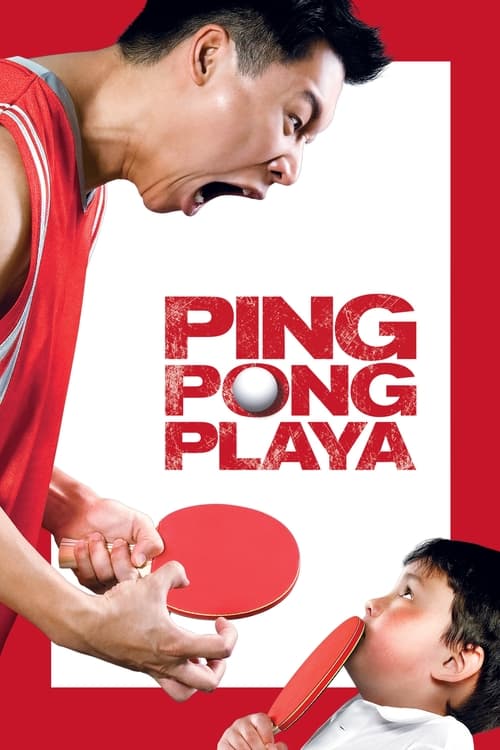
Ping Pong Playa
2008
No user ratings available yet
Diversity score: 6.8 out of 10

2009
Director
Ho Wi-ding
Runtime
85 minutes
Average Rating
No ratings yetSynopsis
The discovery of a discarded sofa, in Taipei city, transforms a routine Sunday into a capricious adventure of perseverance and self-discovery for Filipino guest workers Manuel and Dado.
Overall Score
Good
Category Breakdown
LGBTQ+ Representation
The film captures the organic social fabric of the Filipino migrant community. While it lacks a specific queer-centric narrative arc, it depicts diverse social groupings without relying on stereotypes.
Gender Representation
The narrative disrupts traditional hierarchies by showing men and women participating in shared labor and leisure. This avoids tropes like the domesticated woman or the sole male provider.
Racial & Ethnic Diversity
The film excels by centering the Filipino migrant experience and avoiding tokenism. It uses specific linguistic and cultural markers to assert the agency of a non-Anglo-Saxon majority cast.
Religious & Cultural Diversity
The film offers a sophisticated critique of global capitalist structures and the economic systems driving displacement. Faith is portrayed with sociological nuance as a communal coping mechanism.
Disability Representation
There is no significant evidence regarding the portrayal of visible or invisible disabilities within the film.
Strengths
Areas for Improvement
AI Analysis
Ho Wi-ding’s work provides a profound study of the global care chain, centering the migrant worker rather than the traditional Western-centric gaze. By focusing on the lived experiences of Filipino guest workers, the film challenges homogenized norms and explores how economic necessity shapes identity. The film succeeds in its observational approach, documenting a gender-integrated social ecosystem and a community that exists in flux. It moves beyond simple storytelling to offer a critique of the systemic pressures that govern modern labor and mobility. While the film lacks specific focus on queer-centric arcs or disability representation, its strength lies in its post-colonial perspective and its ability to document the nuances of the diaspora.
2008
2018

2017

2023

2002

2002

2019
2002
2007

2020

1994

2012
No reviews yet. Be the first to share your thoughts on this movie!
Use the rating form above to leave a star rating and optional review.