Mom, Dad and Her
2008
No user ratings available yet
Diversity score: 4.0 out of 10
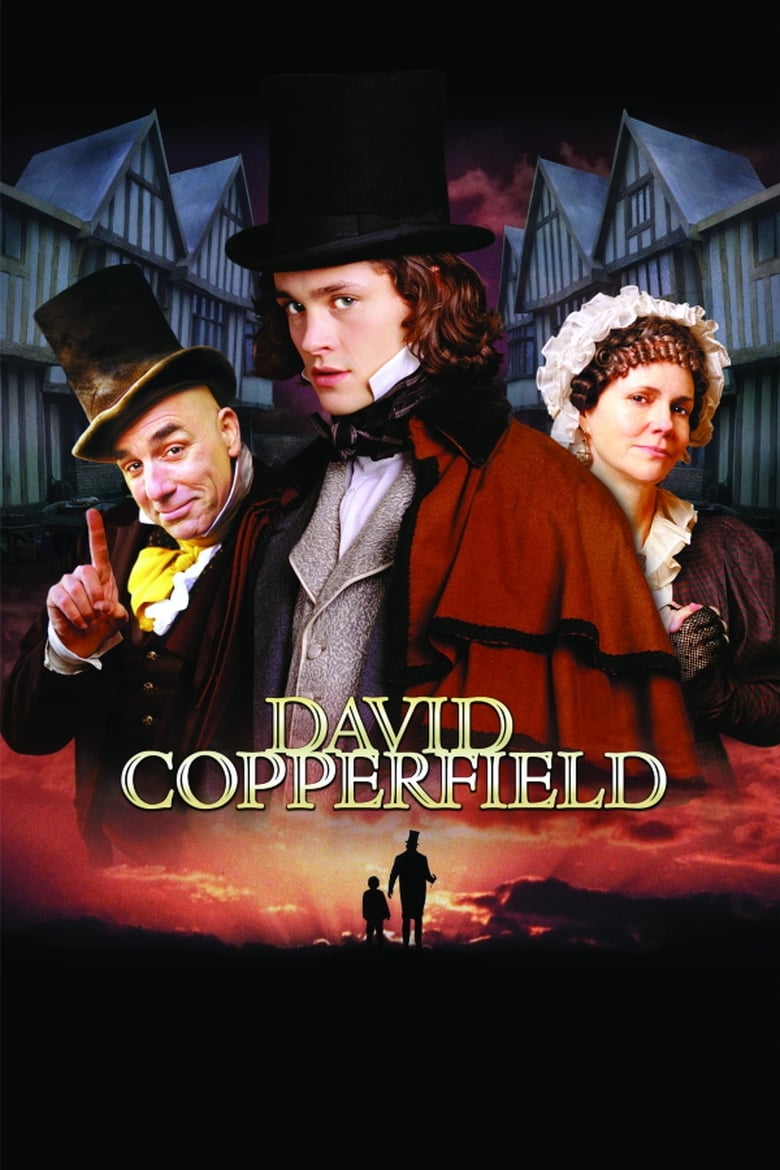
2001
Director
Peter Medak
Runtime
180 minutes
Average Rating
No ratings yetSynopsis
After the death of his father and a second wedding of his mother, David Copperfield suffers from his tyrannical stepfather, Mr. Murdstone. The mother dies shortly after the death of another child, whereupon Mr. Murdstone sends David to London, where he has to work for a starvation wage.Here he makes some new friends, but soon flees from the capital of England to his aunt Traddles in Canterbury, where he is adopted by her.
Overall Score
Limited
Category Breakdown
LGBTQ+ Representation
The film lacks LGBTQ+ characters or non-heteronormative identities. Romantic arcs focus on traditional pairings that serve as milestones for the protagonist's development within Victorian social mores.
Gender Representation
The narrative depicts a rigid patriarchal hierarchy where women often occupy traditional roles as romantic interests. However, it effectively portrays the psychological toll of patriarchal authority and domestic neglect.
Racial & Ethnic Diversity
The cast is predominantly white and Anglo-Saxon, reflecting the homogeneous social landscape of 19th-century England. The story prioritizes class-based identity over racial or ethnic intersectionality.
Religious & Cultural Diversity
The film critiques Victorian class structures and the treatment of the impoverished. It operates through moral realism, treating social injustice as a tragedy rather than a modern political struggle.
Disability Representation
The story touches on the psychological impact of trauma and emotional instability. These elements are treated as character struggles rather than intentional explorations of neurodivergence or disability agency.
Strengths
Areas for Improvement
AI Analysis
This adaptation prioritizes historical authenticity and the classical storytelling of Dickens' original work. It functions as a period-accurate reconstruction that mirrors the social constraints of the 19th century. While the film offers a meaningful critique of class-based oppression and the failures of patriarchal authority, it remains tethered to traditional literary tropes. It lacks the intersectional complexity or diverse casting found in more progressive modern productions. Ultimately, the narrative architecture reinforces conventional Victorian social hierarchies rather than disrupting them through modern lenses of identity or representation.
2008
2006

2007
1984
1995
2005
2011

2008
1994

1997
No reviews yet. Be the first to share your thoughts on this movie!
Use the rating form above to leave a star rating and optional review.