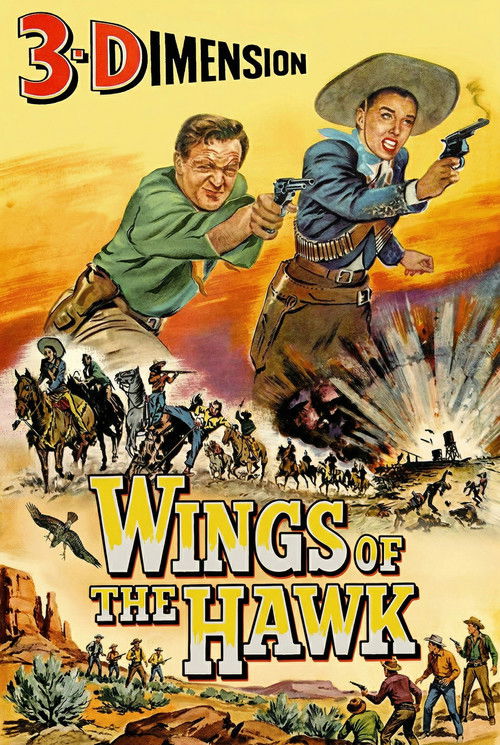
Wings of the Hawk
1953
No user ratings available yet
Representation score: 1.9 out of 10

Representation Score
Minimal
1952
ApprovedDirector
Jacques Tourneur
Runtime
91 minutes
Average Rating
No ratings yetNew Showbiz Analysis
Way of a Gaucho is a typical 1950s Western that upholds the social norms of its time. The film centers on masculine themes of leadership and survival, avoiding deeper explorations of identity or overlapping aspects of diversity. The production does not intentionally challenge traditional views on gender, race, or orientation. Instead, it focuses on the protagonist’s journey from soldier to outlaw leader, following conventional storytelling.
Category Breakdown
The film follows strict mid-century standards where everyone is assumed to be straight or cisgender. There are no non-traditional gender identities or same-sex relationships shown.
The story emphasizes traditional masculine traits like honor and strength. Women do not play major roles in driving the plot, reflecting the gender norms of the 1950s.
Most of the actors have European backgrounds. Despite being set in Argentina, the film presents a mostly white cast, ignoring the country's diverse population.
The story explores conflicts between official laws and personal honor. It portrays outlaws as individuals fighting for survival rather than critiquing the system.
There are no characters with visible or hidden disabilities in the film. The movie does not address disability as part of the story.
Present on Screen
Limited or Absent
Official Synopsis
In 1875 Argentina, after killing a man, a gaucho is sentenced to harsh army duty but he deserts the army and becomes a bandit leader.
1953

1971

1950

1964
1966
1938
1974

1974
No reviews yet. Be the first to share your thoughts on this movie!
Use the rating form above to leave a star rating and optional review.