The Armchair and the Grand Duchess
1943
No user ratings available yet
Representation score: 1.4 out of 10
Representation Score
Minimal
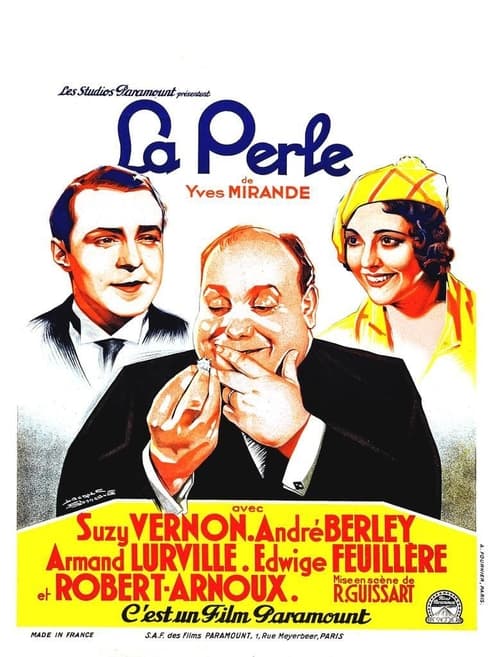
1932
ApprovedDirector
René Guissart
Runtime
73 minutes
Average Rating
No ratings yetNew Showbiz Analysis
The Pearl (1932) is a traditional period comedy that closely follows the social and narrative conventions of its era. The plot revolves around a transactional marriage and the pursuit of status through deceit. While the film offers a lighthearted view of social climbing, it minimally disrupts conventional social expectations. The narrative structure prioritizes established hierarchies of class and gender over diverse representation. Ultimately, the film reflects the demographic and social norms of early 20th-century European cinema without attempting to challenge them.
Category Breakdown
The story focuses on a heterosexual relationship. There are no characters with non-traditional gender identities or critiques of the assumption that everyone is straight.
The female lead primarily serves as a catalyst for the male protagonist's advancement. Her role is tied to her function as a marital prize, reinforcing the gender hierarchies of the time.
The film features a homogeneous cast typical of 1932 French cinema. There is no representation of non-white or diverse ethnic backgrounds.
The narrative emphasizes class mobility and the sanctity of property. It upholds existing social structures without challenging them.
The film does not include any characters with disabilities. There are no neurodivergent or physical impairments among the characters.
Present on Screen
Limited or Absent
Official Synopsis
A jeweler's clerk accidentally swallows a pearl worth three million. The jeweler accepts his marriage to his daughter if the clerk agrees to have the operation. The adventures follow one another until the day when the clerk admits that he has not swallowed the pearl, but as he has become a famous man, the jeweler accepts him as his son-in-law.
1943
1940
1962

2006
1955

1933
1932

1937
No reviews yet. Be the first to share your thoughts on this movie!
Use the rating form above to leave a star rating and optional review.