School of Babel
2014
No user ratings available yet
Representation score: 7.9 out of 10
Representation Score
Excellent
2010
Director
Kirk Simon, Karen Goodman
Runtime
40 minutes
Average Rating
No ratings yetNew Showbiz Analysis
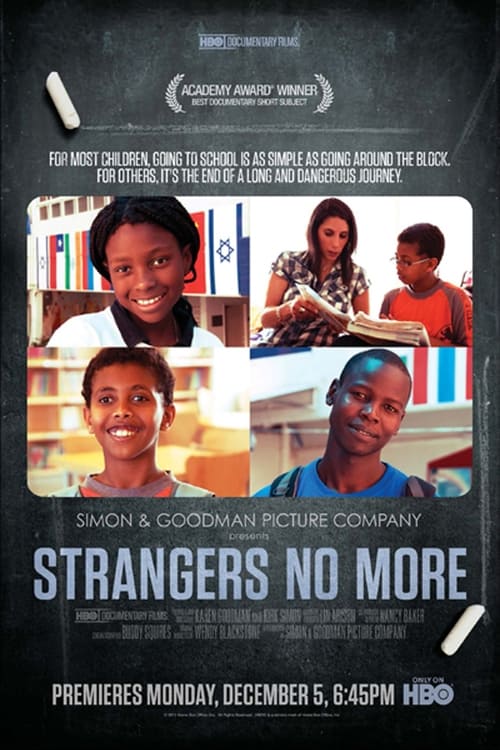
Strangers No More is a humanistic documentary that uses the Bialik-Rogozin School in Tel Aviv as a microcosm for global coexistence. By following students from forty-eight different nations, the film explores the multi-layered realities of poverty, political adversity, and genocide. The film's strength lies in its ability to dismantle monolithic national identities. It replaces them with a narrative of shared human experience, focusing on how displaced youth navigate a multicultural educational environment. While the film excels in racial and ethnic diversity, it remains neutral regarding LGBTQ+ identities and gender representation. It functions primarily as a sociological study of displacement rather than a deep dive into specific identity politics.
Category Breakdown
The film focuses primarily on geopolitical and ethnic displacement. There is no explicit evidence regarding the depiction of LGBTQ+ identities or non-cisgender gender expressions.
The documentary provides a platform for diverse voices through its observational format. However, it lacks specific evidence regarding the subversion of traditional gender hierarchies or gendered roles.
The film excels by centering students from forty-eight different countries. It disrupts ethnic homogeneity by presenting a multi-ethnic student body as the central protagonist group.
The narrative promotes globalism and multiculturalism, challenging nationalist frameworks. It frames the 'stranger' as a participant in a shared human experience rather than an outsider.
While physical disabilities are not explicitly mentioned, the film likely addresses psychological trauma and mental health struggles associated with displacement and genocide.
Present on Screen
Limited or Absent
Official Synopsis
In the heart of Tel Aviv, there is an exceptional school where children from forty-eight different countries and diverse backgrounds come together to learn. Many of the students arrive at Bialik-Rogozin School fleeing poverty, political adversity and even genocide. Here, no child is a stranger. The film follows several students' struggle to acclimate to life in a new land while slowly opening up to share their stories of hardship and tragedy.
2014

2016
2016
2002
2005

2011
2016
2016
No reviews yet. Be the first to share your thoughts on this movie!
Use the rating form above to leave a star rating and optional review.