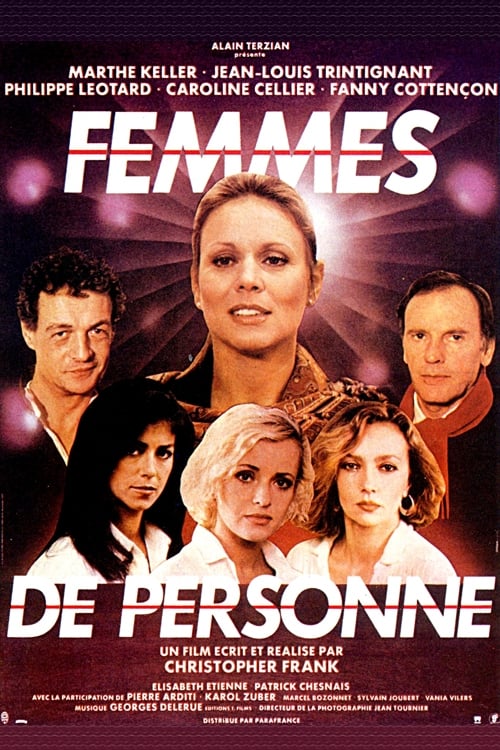
Femmes de personne
1984
No user ratings available yet
Representation score: 4.9 out of 10

Representation Score
Fair
1979
Director
Clarisse Gabus
Runtime
96 minutes
Average Rating
No ratings yetNew Showbiz Analysis
Melancoly Baby functions primarily as a character study that challenges the contentment of traditional social structures. It finds its strength in subverting domestic gender roles and critiquing the perceived emptiness of a wealthy, stable life. However, the film lacks depth in representing diverse identities. The narrative remains confined to a relatively homogeneous social and racial environment, offering little representation for LGBTQ+ identities or people with disabilities. Ultimately, while the film deconstructs bourgeois norms, it does not actively promote a diverse demographic spectrum, resulting in a moderate overall assessment.
Category Breakdown
The film focuses on a romantic triangle involving Olga, her husband, and two male acquaintances. There is no visible evidence of LGBTQ identities or non-cisgender subtext.
Olga is the main character defined by her existential boredom rather than domestic duties. The film emphasizes her subjective experience as she challenges her marital order.
The film seems to take place in a homogeneous social environment. There is no evidence of a multi-ethnic cast or intentional blending of different racial identities.
The story critiques the emptiness of bourgeois stability and the traditional nuclear family. It explores meaning through characters struggling against socio-economic structures and capitalist success.
There is no evidence of visible or invisible disabilities. No characters are portrayed with specific accessibility needs or impairments.
Present on Screen
Limited or Absent
Official Synopsis
Olga is married to Laurent, who is devoted to his career and often leaves Olga at home alone when he travels away for work. Whilst she is rich and wants for nothing, she is terribly bored with life. When Laurent is working away she meets up with his colleague Pierre and through him meets Claude, who is unemployed and fed up of his situation. Can Olga and Claude help each other to get their lives back on track?
1984
1974
1999
1958
1975

1971

1969
1979
No reviews yet. Be the first to share your thoughts on this movie!
Use the rating form above to leave a star rating and optional review.