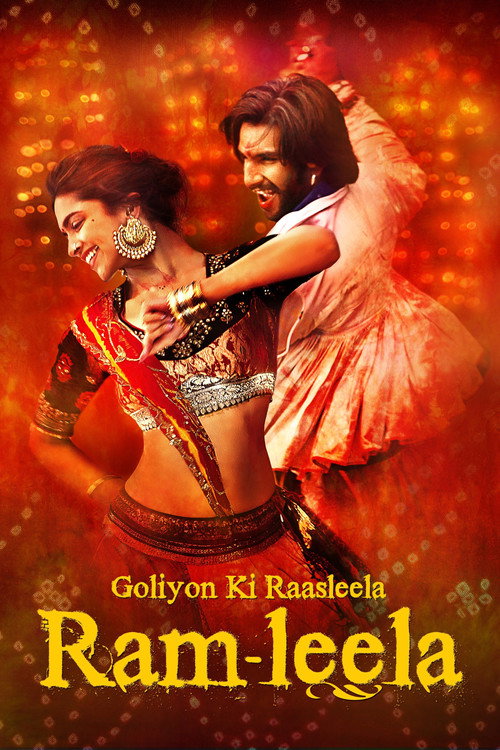
Goliyon Ki Raasleela Ram-Leela
2013
No user ratings available yet
Representation score: 5.0 out of 10
Representation Score
Fair
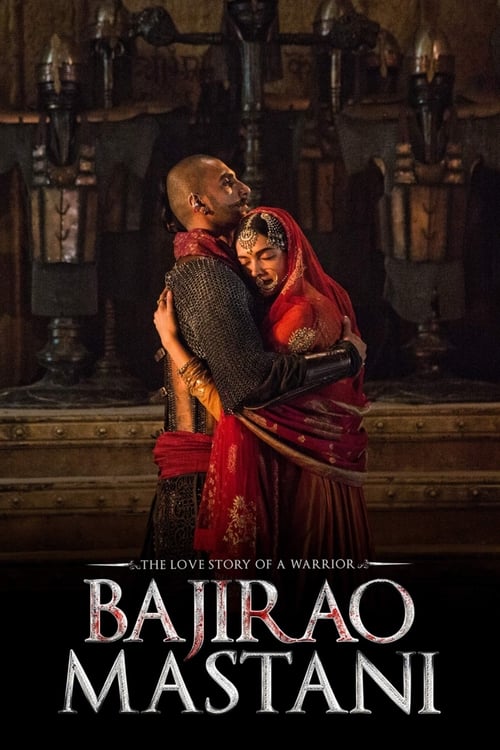
2015
Not RatedDirector
Sanjay Leela Bhansali
Runtime
158 minutes
Average Rating
No ratings yetNew Showbiz Analysis
Bajirao Mastani succeeds as a subversion of the traditional historical epic by centering on the way different parts of someone's identity overlap. The film moves beyond simple romance to critique the systemic oppression of religious and social hierarchies. By positioning a underrepresented woman as the narrative's emotional core, it deconstructs monolithic cultural identities. However, the film remains limited by its lack of LGBTQ+ representation. The conflict is strictly defined by straight-centered and religious boundaries, leaving no room for queer perspectives. Ultimately, the film's strength lies in its portrayal of women's ability to drive the story and its sophisticated handling of ethnic and religious friction within the Maratha Empire.
Category Breakdown
The film operates within a strictly straight-centered framework. It lacks any queer-coded subtext or non-cisgender identities, focusing instead on religious and social caste tensions.
Mastani is depicted who play a significant role in driving the story and martial prowess, challenging patriarchal norms. Kashibai is also given complex interiority and dignity rather than being a passive victim.
The story explores identity politics through Mastani’s mixed Muslim and Bundela heritage. This presence challenges the homogeneity of the Brahminical Hindu court.
The narrative critiques religious orthodoxy by framing institutional dogma as an obstacle to human connection. It prioritizes individual emotional truth over rigid social laws.
There are no prominent depictions of physical or neurodivergent disabilities that serve as central character arcs or plot devices.
Present on Screen
Limited or Absent
Official Synopsis
Peshwa Bajirao married to Kashibai, falls in love with Mastani, a warrior princess in distress. They struggle to make their love triumph amid opposition from his conservative family.
2013
2008
2018

2016
1991
2001
1960

2010
No reviews yet. Be the first to share your thoughts on this movie!
Use the rating form above to leave a star rating and optional review.