For a Handful of Bricks
1987
No user ratings available yet
Representation score: 3.2 out of 10
Representation Score
Fair
1986
Director
Ahmed Yehia
Runtime
120 minutes
Average Rating
No ratings yetNew Showbiz Analysis
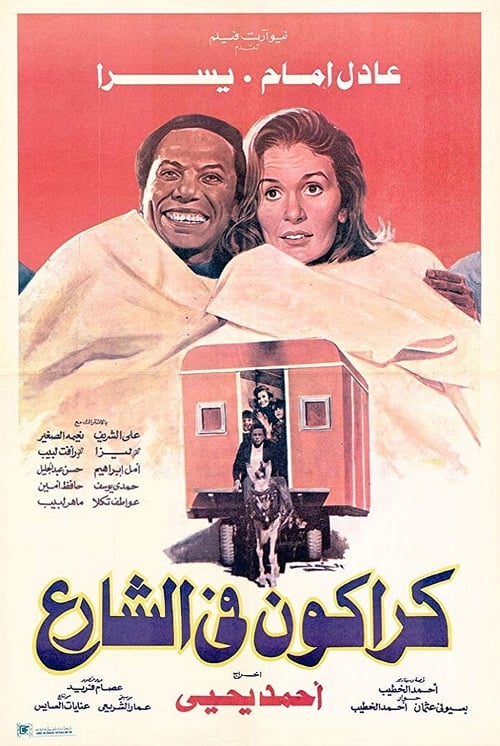
Karakon On The Street is a social realist comedy centered on a family facing displacement. The narrative prioritizes the struggle for housing and socioeconomic precarity over identity-driven politics. While the film offers a poignant critique of urban instability and the fragility of the domestic sphere, it lacks active subversion of social hierarchies. The focus remains on the collective survival of a conventional family unit. Ultimately, the work serves as social commentary on systemic failure rather than a vehicle for diverse or non-traditional identity representation.
Category Breakdown
The film centers on a traditional family structure and does not include characters with non-straight identities or narratives that question the assumption that everyone is straight.
Female characters such as Su'ad, Sarah, and the mother play key roles in the domestic struggle. However, the film does not challenge traditional gender hierarchies.
The film likely reflects its specific regional context. There is no indication of multi-ethnic or multi-layered casting practices.
The story critiques institutional stability by showing housing demolition. It portrays systemic structures as sources of displacement rather than security.
The narrative contains no mention of characters dealing with physical, sensory, or neurodivergent conditions.
Present on Screen
Limited or Absent
Official Synopsis
Sharif, his wife Su'ad, their daughter Sarah, their son Hany and his mother are all living in the shelters after their house was demolished. Due to the inhumane standard of living in the shelters, they go to live in the courtyard of the family house. Unfortunately they find another person living there. Sharif designs and builds a wooden cabin to live in the street. He is subjected to many harassment.
1987

1977

2008

1991

2015
1970
2006

2014
No reviews yet. Be the first to share your thoughts on this movie!
Use the rating form above to leave a star rating and optional review.