Sheer Passion
1998
No user ratings available yet
Representation score: 2.0 out of 10
Representation Score
Limited
1998
Director
Valeria Sarmiento
Runtime
100 minutes
Average Rating
No ratings yetNew Showbiz Analysis
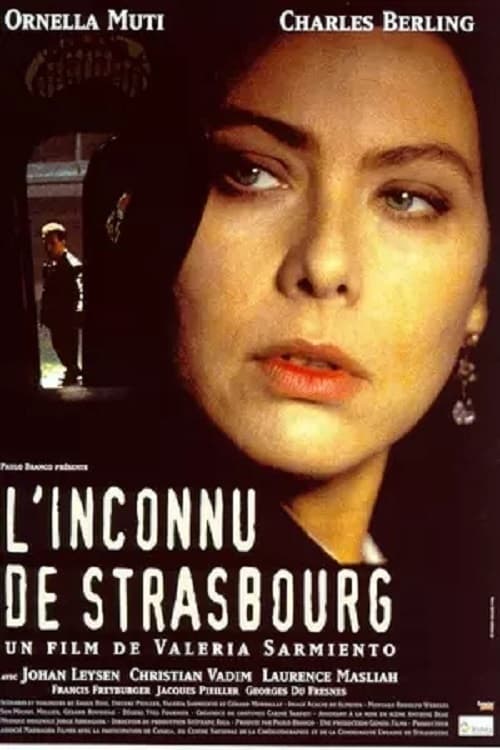
The Stranger From Strasbourg opens on a close-up of Ornella Muti’s face in a dim, intimate space, establishing a tone of psychological obsession rather than thriller action. This image sells a vision of female desire as the central, valid force in a world of passive men. Madeleine is not a victim of her circumstances; she is the architect of her own fate, killing her husband and manipulating the narrative to pursue Jean-Paul. The film’s argument is that desire is a form of self-knowledge, and the camera loves this: it lingers on Muti’s expressions, treating her internal state as the true subject of the film. However, the film’s internal logic pulls apart from its progressive surface. While Madeleine is the active agent, the men she pursues—Jean-Paul and Bastien—remain unscathed by the emotional turbulence they cause. Jean-Paul, the "stranger," is a philosophical mirror who never pays for the chaos he inspires. The film’s ending, a quiet departure, leaves the moral weight with Madeleine’s internal state, but it does not challenge the underlying hierarchy of the intellectual elite. The detective’s preference for writing novels over investigating crime is a satire of institutional duty, but it also reinforces the idea that the upper-middle-class world is a self-contained space where real consequences are optional. The sold meaning is that female desire is powerful, but it is contained within a traditional European social structure. The film does not critique the wealth or education of its characters; it treats them as the natural order. The "stranger" is not a threat to the system but a mirror that reflects the self. The last image, a quiet departure, affirms the status quo: Madeleine has her freedom, but the world around her remains unchanged. The film is a polished, intimate study of desire, but it does not challenge the traditional hierarchies of class, gender, or nation. It sells a vision of female agency that is ultimately contained within the existing social order.
Category Breakdown
The narrative is strictly heterosexual, focusing on the illicit affair between Madeleine and Jean-Paul and her subsequent relationship with Bastien. No queer characters or dynamics appear.
Madeleine is the active engine of the plot: she kills her husband, orchestrates Jean-Paul’s escape, and later takes up with his brother. The camera lingers on her face, treating her desire as the central, valid emotion.
The cast is entirely white European, with Italian, French, and Belgian actors representing national "otherness" rather than racial diversity. Ornella Muti’s Italian identity marks her as the foreign beauty driving the narrative, but no non-white characters appear.
Traditional family structures are disrupted by Madeleine’s murder of her husband, yet the film romanticizes the intellectual elite. The detective’s preference for writing novels over investigating crime satirizes institutional duty, while the upper-middle-class setting treats wealth and education as the natural order.
No characters with disabilities appear, and no physical or cognitive impairments are depicted or discussed. The film’s focus remains on psychological desire and social dynamics.
Present on Screen
Limited or Absent
Official Synopsis
Madeleine is with her lover, Jean-Paul, when her husband arrives home and catches the two together. Madeleine kills her husband and tells Jean-Paul to flee before the police arrive. After Jean-Paul drives away, he picks up a hitchhiker. When the car, stolen by the hitchhiker, explodes, police believe the dead hitchhiker is Jean-Paul. Madeleine takes up with Jean-Paul's brother, Bastien, while Jean-Paul, arriving in Strasbourg, is mistaken for the heir to a fortune. The detective on the case spends more time writing crime novels than investigating real-life crimes.
1998
1965

1998
1992
1978
1994
1990

2011
No reviews yet. Be the first to share your thoughts on this movie!
Use the rating form above to leave a star rating and optional review.