All The Saints
2002
No user ratings available yet
Representation score: 1.6 out of 10
Representation Score
Fair
1963
Director
Lennart Olsson
Runtime
49 minutes
Average Rating
No ratings yetNew Showbiz Analysis
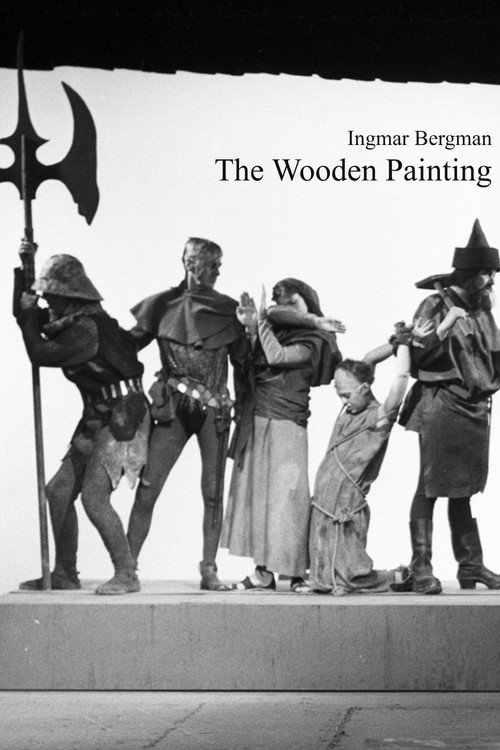
Wood Painting (1963) is a historical allegory that prioritizes existential themes over modern characters who reflect more than one aspect of diversity. It uses a medieval setting to deconstruct social and spiritual hierarchies through the motif of the 'dance of death.' The film presents a complex view of womanhood, moving beyond submissive archetypes. However, it remains limited by its localized European setting and a lack of visible LGBTQ+ representation. Ultimately, the work critiques institutional power, favoring subjective human experience over dogmatic religious or social structures.
Category Breakdown
The film does not explicitly depict queer identities or non-straight relationships. However, the tragicomic tone might subtly challenge traditional romantic clichés.
Women are portrayed in various roles, including an actress, a runaway wife, and a symbol of the Virgin Mary. These figures break traditional domestic roles by taking on positions of movement or symbolic importance.
Set in historical Småland, the story focuses on a largely homogeneous European population. While the Crusades hint at cross-cultural interactions, the narrative remains centered on a specific regional context.
The film uses a tragicomic lens to critique religious and institutional certainty. By depicting a world paralyzed by death and chaos, it challenges the binary morality of the time.
There is no specific depiction of characters with physical or neurodivergent disabilities. The film uses mortality as a universal metaphor rather than addressing individual disability experiences.
Present on Screen
Limited or Absent
Official Synopsis
A knight returning home with his squire Jons after a ten-year crusade to the Holy Land finds a country paralyzed by the Black Death, a newly burned witch, a blacksmith and his runaway wife, an actress, a Virgin Mary with her child and the knight's faithful wife. All approaches the realm of the dead in a single "tragicomic long dance of death". The narrator begins with: "In a church in southern Småland is our spectacle painted on the wall just to the right of the entrance to the porch. The unknown painter has on the church wall depicted a number of people in formal long dance toward death."
2002
1989
1958
1960
2007

1964
1980
2004
No reviews yet. Be the first to share your thoughts on this movie!
Use the rating form above to leave a star rating and optional review.