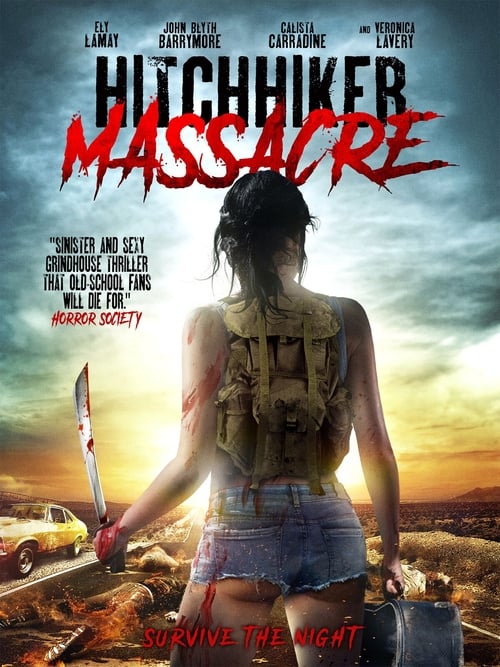
Hitchhiker Massacre
2017
No user ratings available yet
Diversity score: 2.6 out of 10

1980
Director
Nathan Schiff
Runtime
95 minutes
Average Rating
No ratings yetSynopsis
A series of horrible murders prompts a massive police investigation. Inspector James Cameron, a two-fisted roughneck with his own philosophy on handling crime, heads the investigation. A group of lepers living in the Long Island wastelands have created a terror network, killing and feeding off the flesh of innocent victims. Their leader has mutated into an invulnerable monster; he intends to propagate and strengthen his stronghold. Aided by his son Jack and a couple of motorcycle freaks, food is supplied to the clan via murder. As the authorities close in on the cannibal killers, an all-out bloodbath ensues.
Overall Score
Limited
Category Breakdown
LGBTQ+ Representation
The film lacks any mention of LGBTQ+ characters or non-heteronormative identities. The narrative focus remains strictly on the conflict between law enforcement and the cannibalistic group.
Gender Representation
The story emphasizes traditional masculine archetypes through Inspector James Cameron. There is no indication of female agency or the deconstruction of patriarchal leadership within the plot.
Racial & Ethnic Diversity
The synopsis focuses on biological distinctions rather than racial or ethnic identity. The narrative appears to center on a localized, homogeneous conflict without evidence of diverse casting.
Religious & Cultural Diversity
The film portrays traditional Western institutionalism through the protagonist. However, it frames the social outcasts of the leper clan as a predatory terror network.
Disability Representation
Leprosy is used as a primary driver of horror and antagonism. Physical disability is framed as a marker of monstrosity and moral decay rather than being portrayed with agency.
Strengths
Areas for Improvement
AI Analysis
The film adheres to traditional horror conventions that rely on the 'monster' trope. It uses physical mutation and biological deviance to signify a threat to social stability and order. The narrative structure prioritizes a rugged, masculine protagonist to navigate a world of perceived social outcasts. This creates a standard 'order vs. chaos' framework common in 1980s genre cinema. Ultimately, the work lacks intentional subversion of social hierarchies. It reinforces traditionalist views of law and order while framing marginalized groups as inherently predatory.
2017

1981
1980
1983
1982
1978

2014

1987
2012

1995
1988
1982
No reviews yet. Be the first to share your thoughts on this movie!
Use the rating form above to leave a star rating and optional review.