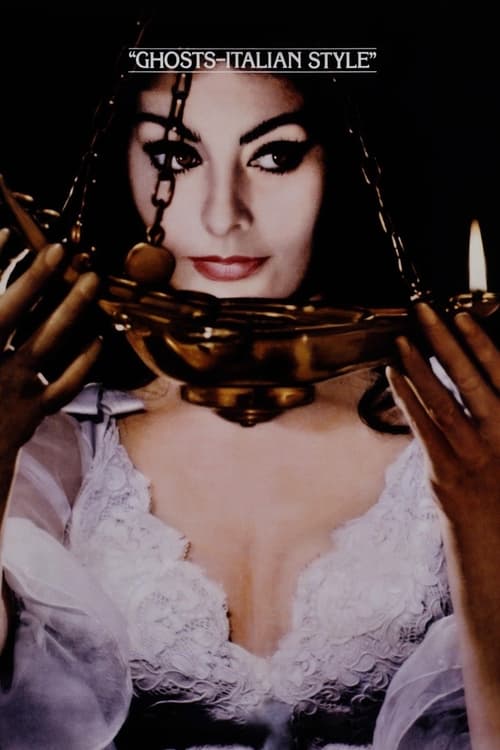
Ghosts, Italian Style
1967
No user ratings available yet
Representation score: 2.0 out of 10

Representation Score
Minimal
1981
Director
Giorgio Capitani
Runtime
92 minutes
Average Rating
No ratings yetNew Showbiz Analysis
Hot Spirits operates as a traditional genre piece that adheres to the social and narrative conventions of its time. The film relies heavily on established clichés of class and gender, with the protagonist's influence tied directly to his aristocratic status. The narrative reinforces conventional Western frameworks of lineage and romantic pairing rather than challenging them. It functions as a standard Gothic comedy centered on familial obligations and inheritance. Ultimately, the film lacks intentional disruption of these traditional structures, focusing instead on preserving European social hierarchies.
Category Breakdown
The film does not include any characters with LGBTQ+ identities. The plot revolves around traditional romantic and family relationships.
The story centers on a male protagonist dealing with his inheritance. The female character is portrayed primarily by her beauty and her role in the family's legacy.
The film focuses on an Italian aristocrat and emphasizes a specific heritage, suggesting a homogeneous European cast. There is no indication of racial diversity or mixed cultural backgrounds.
The film explores traditional Western structures like aristocracy and ancestral property. It stays rooted in established European social hierarchies and the preservation of family traditions.
There is no mention of characters dealing with physical, sensory, or neurodivergent conditions within the narrative.
Present on Screen
Limited or Absent
Official Synopsis
Giovanni is a rich Italian aristocrat. He inherit a castle occupied by the ghost of an ancestor. Part of the inheritance is of a young beautiful blonde tourist, far relative of Giovanni. The two have to pay a ticket to the ghost to be free to own the castle. Guess what?
1967
1972
1963
2012
1959
1952
1962

1982
No reviews yet. Be the first to share your thoughts on this movie!
Use the rating form above to leave a star rating and optional review.