Black Power
1975
No user ratings available yet
Representation score: 3.5 out of 10
Representation Score
Limited
1959
Director
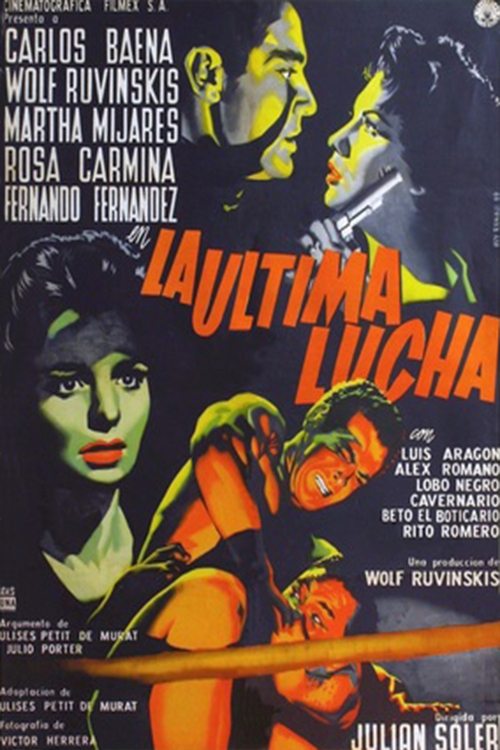
Julián Soler
Runtime
90 minutes
Average Rating
No ratings yetNew Showbiz Analysis
La última lucha is a product of the Golden Age of Mexican cinema, operating within the established social and narrative structures of its time. While it provides a culturally specific alternative to Hollywood-centric homogeneity, it does not aim to challenge systemic norms. The film's focus on the wrestling arena creates a masculine-dominated environment that limits women's influence. The melodrama relies on traditional values of honor and family, reinforcing mid-century social stability rather than questioning it. Ultimately, the work serves as a reflective slice-of-life drama that mirrors the era's conventional hierarchies, offering cultural specificity without exploring diverse identities.
Category Breakdown
The film follows the straight-centered social norms typical of 1950s Mexican melodrama. There is no indication of non-straight relationships or same-sex intimacy.
Set in the male-dominated world of lucha libre, the film reinforces traditional gender hierarchies. Women are shown in supporting or domestic roles rather than taking a leading role in the main action.
As a Mexican production, the film offers a non-Anglo-Saxon perspective. However, the casting likely reflects the social hierarchies of the era's domestic film industry.
The story centers on traditional sports and conventional values. It uses pillars like family and honor to heighten emotional stakes without questioning them.
The available narrative information contains no mention of characters dealing with physical or neurodivergent disabilities.
Present on Screen
Limited or Absent
Official Synopsis
Slice-of-life melodrama: backstage at the wrestling arena.
1975
1981
1961

2009
1966
2002
2000
1989
No reviews yet. Be the first to share your thoughts on this movie!
Use the rating form above to leave a star rating and optional review.