
The Opium Den
1947
No user ratings available yet
Representation score: 2.5 out of 10
Representation Score
Limited
1977
Director
Tiziano Longo
Runtime
90 minutes
Average Rating
No ratings yetNew Showbiz Analysis
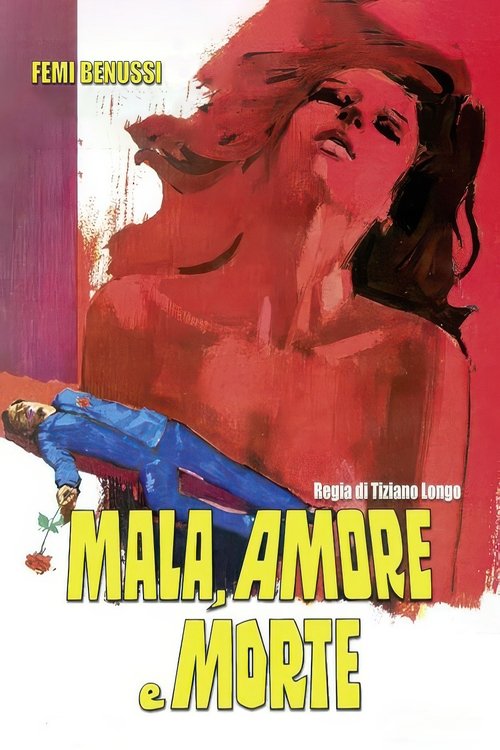
Mala, Love and Death functions as a gritty, genre-driven character study. Its primary strength lies in its subversion of gender roles, granting the female lead a significant role in driving the criminal underworld rather than casting her as a passive victim. However, the film lacks multi-layered breadth. It remains rooted in the homogeneous casting and narrow demographic layering common to 1970s Italian crime cinema, offering little in the way of racial or queer diversity. Ultimately, the work provides a cynical, morally complex narrative that critiques institutional stability, even if it fails to represent a wide spectrum of human identities.
Category Breakdown
The film lacks explicit evidence of queer narratives or non-straight relationships. Within the 1970s Italian crime genre, such representation is often absent or relegated to peripheral clichés.
Marisa serves as a central protagonist who exercises a significant role in driving the story through blackmail and crime. This role disrupts traditional hierarchies by positioning a woman as a driver of illicit plot mechanics.
As a localized Italian production, the film likely adheres to a homogeneous casting structure. There is little evidence of racial blending or diverse casting typical of the era's European crime dramas.
The narrative explores moral relativism by centering on criminal enterprise and blackmail. This approach challenges traditional social orders and favors subjective, situational ethics over singular moral frameworks.
There is no documented evidence regarding the inclusion of characters with physical or neurodivergent disabilities in this work.
Present on Screen
Limited or Absent
Official Synopsis
The young Marisa, after having inherited from her aunt, gets involved in blackmail and crime.
1947
1983
1978

1976
1961
1975

1967

1959
No reviews yet. Be the first to share your thoughts on this movie!
Use the rating form above to leave a star rating and optional review.