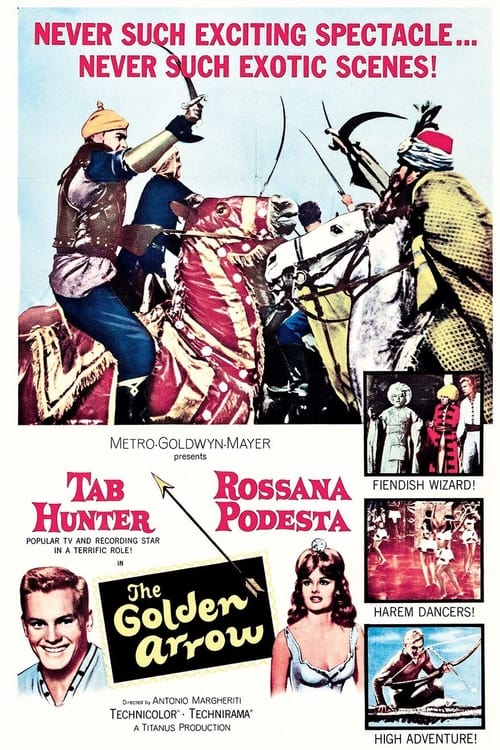
The Golden Arrow
1962
No user ratings available yet
Representation score: 3.1 out of 10

Representation Score
Minimal
1962
ApprovedDirector
Duccio Tessari
Runtime
111 minutes
Average Rating
No ratings yetNew Showbiz Analysis
My Son, the Hero is a classic genre piece that emphasizes traditional storytelling formulas over social critique. It centers on the individualistic hero archetype, highlighting physical prowess and masculine competence within a mythological context. The film adheres closely to the social and cinematic norms of the early 1960s. It presents a homogeneous social environment that lacks significant racial, gender, or LGBTQ+ diversity, reinforcing the conventional hierarchies of the time. While the narrative explores moral ambiguity, this serves the aesthetic of the adventure genre rather than offering a critique of cultural or institutional power structures.
Category Breakdown
The film focuses on traditional masculine roles and a relationship that assumes everyone is straight. It does not include characters with non-binary gender identities or challenge the idea that everyone is heterosexual.
The story revolves around a male protagonist's journey, emphasizing his strength and competence. A female character is present but mainly serves as a romantic interest in a supporting role.
The cast is mostly white, reflecting the era's typical casting practices. The film does not feature diverse ethnic representation or actors playing roles outside their traditional backgrounds.
The film explores moral ambiguity through a gray morality theme. However, this serves the adventure genre rather than critiquing religious or institutional power structures.
Characters are defined by their physical abilities and usefulness. The film does not address neurodivergence, physical disabilities, or chronic illnesses.
Present on Screen
Limited or Absent
Official Synopsis
Krios, the youngest of the Titans, may be the least strong of the seven brothers whose strength comes from their mother, earth-goddess Gaia, but is by far the smartest, and thus their natural leader. He arrives on Crete, the kingdom of the mighty king Minos, impresses him as gladiator, gains his trust, falls in love with a mortal girl and discovers both Minos's human sacrifice-cult and a foreign conspiracy to seize power with a hidden army.
1962

1973
1961
1958
1964
1981
1962
1963
No reviews yet. Be the first to share your thoughts on this movie!
Use the rating form above to leave a star rating and optional review.