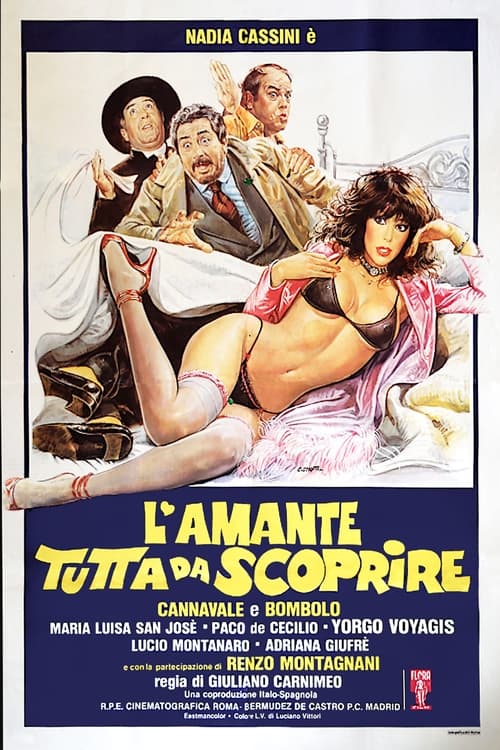
L'amante tutta da scoprire
1981
No user ratings available yet
Representation score: 2.5 out of 10
Representation Score
Limited
1975
Director
Gianfranco Baldanello
Runtime
92 minutes
Average Rating
No ratings yetNew Showbiz Analysis
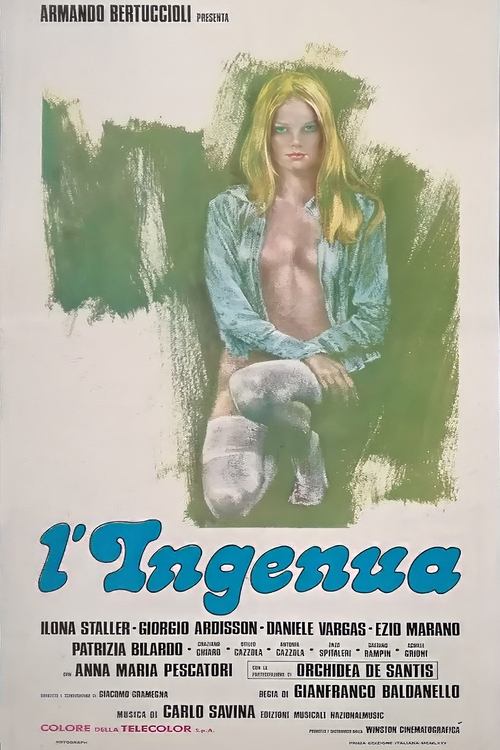
L'ingenua is a character-driven comedy that adheres to the traditional frameworks of 1975 Italian cinema. While it avoids some clichés of passive femininity, it lacks broader diversity and multi-layered depth. The film's strength lies in its subversion of passive female stereotypes through a forceful female lead. However, the narrative remains largely conventional in its social and racial depictions. Ultimately, the film serves as a situational satire rather than a vehicle for systemic critique or diverse representation.
Category Breakdown
The film centers on a traditional romance between a young man and his girlfriend. There is no indication of queer subtext or non-straight relationships.
A vaudeville actress is portrayed with a strong, assertive personality. However, her aggressive behavior is shown as a source of conflict for the male lead.
The film lacks multiculturalism or diverse casting. It seems to reflect the demographic uniformity typical of mid-century Italian regional cinema.
The plot uses a scam and a contract to satirize social pretense. This satire stays within the conventional boundaries of comedic storytelling.
The story does not feature any characters with physical or neurodivergent disabilities.
Present on Screen
Limited or Absent
Official Synopsis
A young man somewhat embarrassed and distressed by a rather aggressive girlfriend, a vaudeville actress, and a newly married couple with an odd contract: all become involved, whether they intended to or not, in a scam involving a villa.
1981
1973
1980
1976
1980
1975
1976
1964
No reviews yet. Be the first to share your thoughts on this movie!
Use the rating form above to leave a star rating and optional review.