
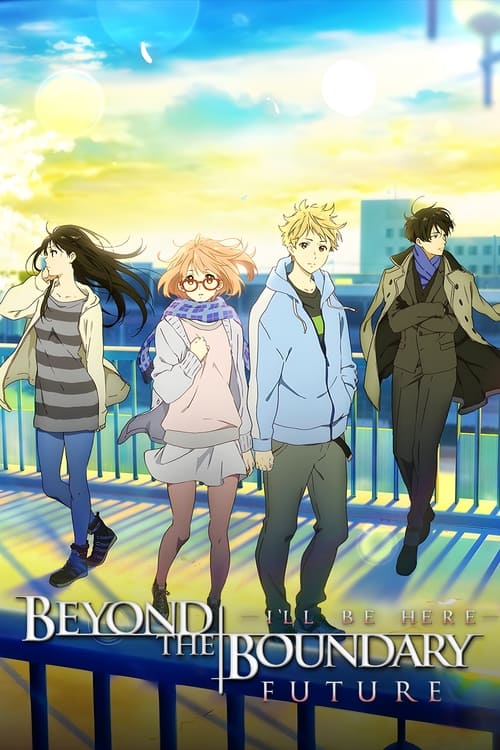
Beyond the Boundary: I'll Be Here – Past
2015
No user ratings available yet
Representation score: 3.8 out of 10
Representation Score
Fair
2015
TV-14Director
Taichi Ishidate
Runtime
90 minutes
Average Rating
No ratings yetNew Showbiz Analysis
The film functions as a traditional fantasy-drama that prioritizes character-driven emotional resolution over social critique. It operates strictly within established genre conventions, focusing on the internal world of its protagonists. While the female lead demonstrates ability to act through her supernatural role, the narrative lacks a concerted effort to challenge social hierarchies or include perspectives reflecting multiple aspects of diversity. The setting remains culturally homogeneous and adheres to assumptions that everyone is straight or cisgender. Ultimately, the work serves as a narrative conclusion for its specific characters rather than a vehicle for exploring broader systemic or diverse social frameworks.
Category Breakdown
The film relies on traditional romantic structures. The central tension is built around the bond between Akihito and Mirai, with no characters having identities that don't match their birth-assigned gender.
Mirai plays a significant role in driving the story through her supernatural capabilities and involvement in the conflict. However, the power dynamics remain within conventional genre expectations without challenging traditional hierarchies.
The cast and setting are culturally homogeneous, reflecting a contemporary Japanese landscape. The narrative does not use non-human metaphors to explore racial or ethnic diversity.
Storytelling follows a standard framework of contemporary Japanese themes. The moral landscape focuses on individual sacrifice and interpersonal loyalty rather than systemic or institutional critique.
Supernatural elements function as genre mechanics rather than an exploration of disability. Characters are not given real power that moves beyond magical or supernatural clichés.
Present on Screen
Limited or Absent
Official Synopsis
The battle is over, and they can go about their normal lives now... or so they thought. With no time to rejoice after miraculously saving Mirai from Beyond the Boundary, Mirai lost all her memories. Akihito, now a high school senior, starts to avoid Mirai thinking it’s for the better. Not aware of Akihito’s feelings, Mirai tries to get closer to Akihito. Then, someone who knows of Mirai appears in front of the two. With Akihito’s troubles in vain, Mirai once again sets forth on a battle that forces her to look within.
2015

2013

2013

2012

2020

2013
2015

2020
No reviews yet. Be the first to share your thoughts on this movie!
Use the rating form above to leave a star rating and optional review.