
Catapult
2009
No user ratings available yet
Representation score: 4.3 out of 10
Representation Score
Excellent
2015
Director
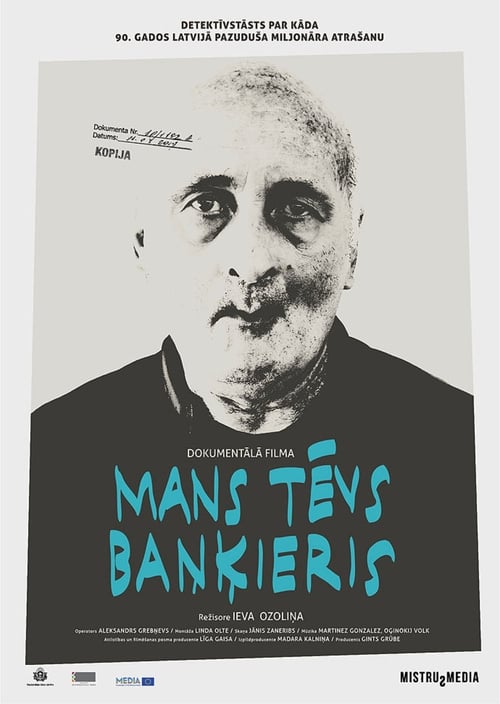
Ieva Ozoliņa
Runtime
71 minutes
Average Rating
No ratings yetNew Showbiz Analysis
My Father the Banker is a sophisticated investigative documentary that shifts the focus from a lost patriarch to the daughter's pursuit of truth. By centering a female perspective, the film disrupts traditional family hierarchies and provides a proactive lead in the search for identity. The narrative excels by connecting personal trauma to global shifts, moving between post-Soviet landscapes and Malaysia. This prevents the story from feeling insular, instead framing the search within a broader context of international law and migration. While the film lacks specific LGBTQ+ representation, it offers a nuanced look at mental health and the destabilizing effects of systemic change. It treats the subject's condition as a consequence of historical upheaval rather than a mere plot device.
Category Breakdown
The film focuses on familial lineage and a genealogical investigation. It does not feature explicit LGBTQ+ characters or themes addressing non-straight identities.
The narrative challenges traditional gender roles by centering the daughter as the active protagonist. Her role as an investigator drives the plot, rather than leaving her a passive recipient of her father's legacy.
The story moves from Latvia to Malaysia, introducing a cross-cultural dimension. This global scope avoids a purely Eurocentric perspective by connecting Eastern European history with Southeast Asian reality.
The documentary critiques how the collapse of the USSR and unregulated capitalism erode identity. It explores the tension between personal memory and the systemic realities of international institutions.
Mental health is treated with gravity through the subject's potential residence in an asylum. The film links cognitive well-being to the psychological toll of rapid societal and systemic instability.
Present on Screen
Limited or Absent
Official Synopsis
Self-made banker Boriss Osipovs achieves quick success immediately after the collapse of the USSR, but he flees Latvia to avoid arrest for illegal operations. Fifteen years later, his family receives a photograph from Interpol of an elderly gentleman with the same name who resides in a Malaysian mental asylum. Could it be him? Despite the reservations of her family, Osipovs’ daughter, documentary director Ieva Ozoliņa, starts an investigation to find out the truth about the man in the photograph. An emotional story about a man who loses himself in times of change...and the daughter who hopes to find him.
2009

2018
2019

2021
2017
2020
2017

2015
No reviews yet. Be the first to share your thoughts on this movie!
Use the rating form above to leave a star rating and optional review.