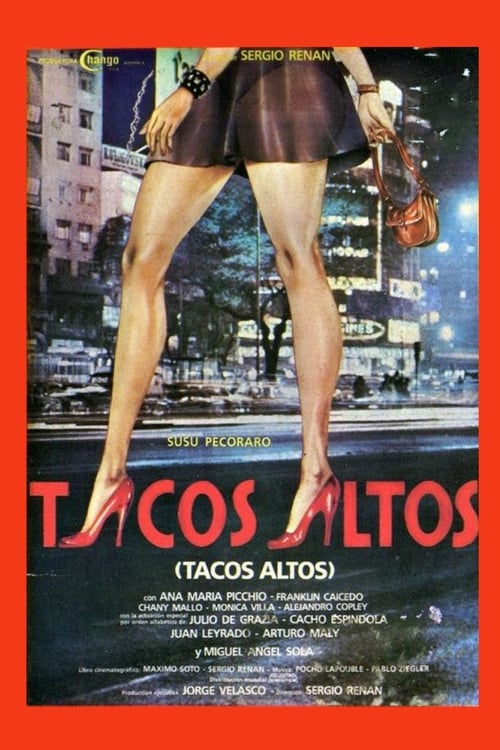
High Heels
1985
No user ratings available yet
Representation score: 5.9 out of 10

Representation Score
Fair
1985
Director
René Cardona Jr.
Runtime
103 minutes
Average Rating
No ratings yetNew Showbiz Analysis
The film serves as a character-driven exploration of a protagonist's ability to drive the story within a underrepresented social context. It avoids simplistic moralizing by centering a protagonist who uses intellect to challenge established power structures. While the narrative offers a critique of social institutions, it falls short in representing LGBTQ+ identities and lacks multi-layered racial diversity. The story primarily centers on a heterosexual power dynamic.
Category Breakdown
The film does not include any characters who identify as LGBTQ+ or explore non-straight relationships. The story revolves around a heterosexual conflict between a protagonist and an older male figure.
The protagonist challenges traditional gender roles by using intelligence to outmaneuver a powerful male figure. She avoids being portrayed as a passive victim by actively using strategy within a male-dominated environment.
The cast likely mirrors the ethnic makeup typical of 1985 Mexican cinema, with no indication of intentional racial diversity or casting to challenge historical norms.
By focusing on a brothel, the film questions traditional social institutions and conventional morality. It delves into situational ethics and skepticism towards established patriarchal authority.
There is no mention of characters with visible or invisible disabilities in the film.
Present on Screen
Limited or Absent
Official Synopsis
A prostitute enters a brothel and establishes a rivalry faking love with the old owner.
1985

1967

1965
1972

1981

1980
1966
1979
No reviews yet. Be the first to share your thoughts on this movie!
Use the rating form above to leave a star rating and optional review.