
08/15 at Home
1955
No user ratings available yet
Diversity score: 2.8 out of 10

1954
Director
Paul May
Runtime
103 minutes
Average Rating
No ratings yetSynopsis
Life in the barracks, drill, harassment, and private Asch′s pranks are the ingredients of Hans Hellmut Kirst′s successful novel "08/15" (the number of an Army regulation). Shortly before the outbreak of World War II: Private Asch and gunner Vierbein belong to the same unit but could not be more contrary. The instructors use every opportunity to bully the clumsy Vierbein with erratic corporal Platzek leading the way. The harassment starts with minor extra duties but soon the methods become more and more brutal. Finally, Asch comes to Vierbein′s help and takes on his superiors. Joachim Fuchsberger stars in his first major role.
Overall Score
Limited
Category Breakdown
LGBTQ+ Representation
The film lacks any evidence of LGBTQ+ characters or non-cisnormative identities. The narrative focuses exclusively on the interpersonal dynamics within a military unit.
Gender Representation
The story is centered on a male-dominated military environment. It reinforces a conventional masculine setting through conflicts driven by male-on-male power dynamics.
Racial & Ethnic Diversity
Set in a pre-WWII German military context, the cast appears ethnically homogeneous. There is no evidence of diverse ethnic representation within the barracks.
Religious & Cultural Diversity
The film critiques traditional Western institutions by portraying military hierarchy as corrupt. It disrupts idealized views of discipline by focusing on systemic bullying and oppression.
Disability Representation
The character Vierbein is described as clumsy, which triggers harassment from superiors. It is unclear if this is a functional disability or a narrative character flaw.
Strengths
Areas for Improvement
AI Analysis
08/15 is a mid-century war drama that prioritizes the deconstruction of institutional authority over demographic variety. While the film lacks modern intersectional representation, it offers a progressive critique of systemic cruelty within the military hierarchy. The narrative's strength lies in its willingness to portray military discipline as a tool for oppression rather than patriotism. However, the film is heavily constrained by the historical and demographic homogeneity of its setting. Ultimately, the film functions as a psychological study of power dynamics, though it remains a strictly masculine and ethnically uniform production.
1955
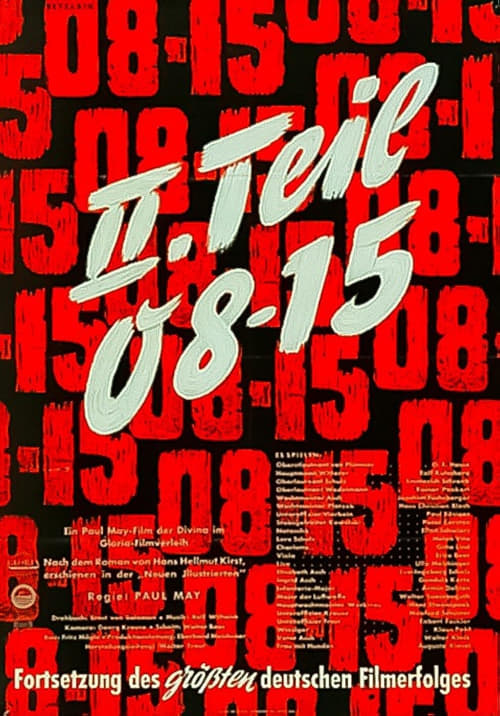
1955

1959
1956
1954
1989
1943
1945
1943
1943
1964
1954
No reviews yet. Be the first to share your thoughts on this movie!
Use the rating form above to leave a star rating and optional review.