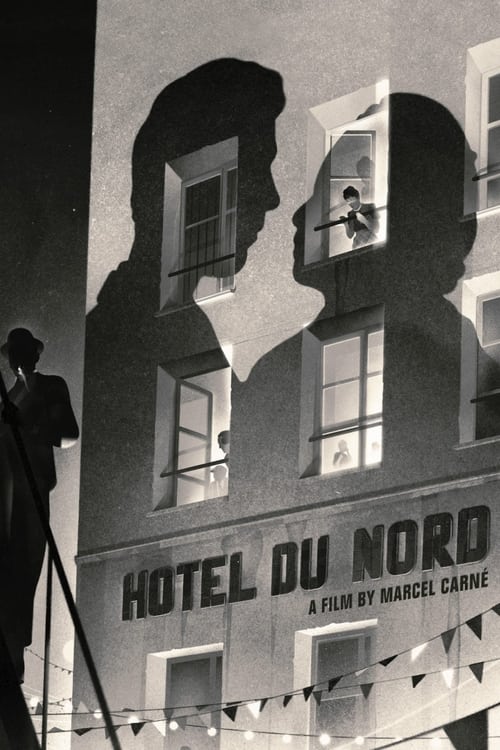
Hôtel du Nord
1938
No user ratings available yet
Diversity score: 4.1 out of 10

1997
Director
Bigas Luna
Runtime
100 minutes
Average Rating
No ratings yetSynopsis
Horty, a French foundry worker, wins a contest and is sent to see the sailing of the Titanic. In England, Marie, saying she is a chambermaid on the Titanic and cannot get a room, asks to share his room. They do, chastely; when he awakens, she is gone, but he sees her at the sailing and gets a photo of her. When he returns home, he suspects that his wife Zoe has been sleeping with Simeon, the foundry owner. Horty goes to the bar, where his friends get him drunk and he starts telling an erotic fantasy of what happened with him and Marie, drawing a larger audience each night.
Overall Score
Fair
Category Breakdown
LGBTQ+ Representation
The film lacks LGBTQ+ characters or non-heteronormative identities. The central romantic tension remains within a traditional, eroticized heterosexual framework.
Gender Representation
The narrative subverts traditional hierarchies by centering the female protagonist's sexual agency. She acts as an active participant in navigating class and desire rather than a passive recipient of the male gaze.
Racial & Ethnic Diversity
The cast is predominantly white and European, reflecting the historical setting. It lacks meaningful intersectional diversity or non-Anglo-Saxon perspectives.
Religious & Cultural Diversity
The story engages with class rigidity and the divide between service and elite classes. It frames the protagonist's unconventional behavior as personal liberation rather than systemic rebellion.
Disability Representation
There are no prominent depictions of physical or neurodivergent disabilities serving as central narrative drivers.
Strengths
Areas for Improvement
AI Analysis
The film presents a complex, if limited, portrait of social dynamics. It finds strength in its subversion of gendered power, moving away from the trope of the subservient maid to highlight female autonomy. This provides a more nuanced look at desire and agency than many period dramas. However, the film remains largely homogeneous. The lack of racial and LGBTQ+ representation keeps the narrative within a narrow demographic framework. While it critiques social hierarchies through a lens of personal liberation, it does not offer a broader political or systemic critique. Ultimately, the work occupies a transitional space. It challenges rigid social structures through individual agency but fails to provide significant intersectional or diverse perspectives.
1938
2021

2007

2010
1950

1985

1999

1994

2021

2023

1996

1998
No reviews yet. Be the first to share your thoughts on this movie!
Use the rating form above to leave a star rating and optional review.