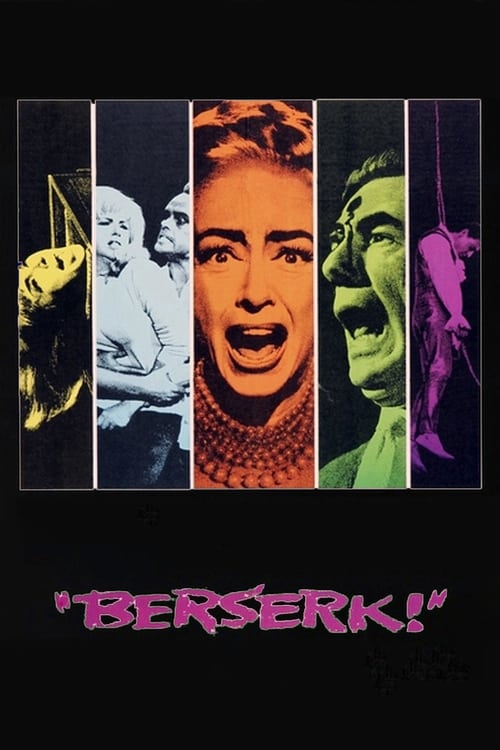
Berserk!
1967
No user ratings available yet
Representation score: 0.5 out of 10

Representation Score
Minimal
1947
Director
A. Barr-Smith
Runtime
63 minutes
Average Rating
No ratings yetNew Showbiz Analysis
The Hangman Waits is a conventional mid-century crime thriller that adheres to the social and moral norms of its time. The narrative emphasizes genre clichés and a standard procedural arc over progressive character development or disrupting traditional hierarchies. As part of the British 'B' feature circuit, the film lacks intentional narrative subversion. It focuses on a fatalistic moral arc where a criminal meets a gruesome end, reinforcing established social orders rather than challenging them. Ultimately, the film offers limited depth in reflecting the homogeneous and narrow focus on straight relationships of post-war Britain.
Category Breakdown
The film follows a traditional crime-and-punishment storyline. There is no indication of diverse sexual orientations or gender identities, nor does it critique the assumption that everyone is straight or cisgender.
The story centers around a male protagonist whose actions drive the plot. Female characters, such as the usherette, play supporting roles without having their own independent roles.
The film likely reflects the demographic norms of 1947 Britain. There is no evidence of actors from different racial backgrounds playing roles traditionally associated with Anglo-Saxons.
The narrative upholds traditional notions of justice and social order. It functions as a standard procedural thriller without critiquing Western institutions or social structures.
There is no documented evidence regarding the inclusion of characters with physical or neurodivergent disabilities in the plot details.
Present on Screen
Limited or Absent
Official Synopsis
A cinema organist carries out a series of grisly murders.
1967

1943

1940

1946

1946

1972

1941

1959
No reviews yet. Be the first to share your thoughts on this movie!
Use the rating form above to leave a star rating and optional review.