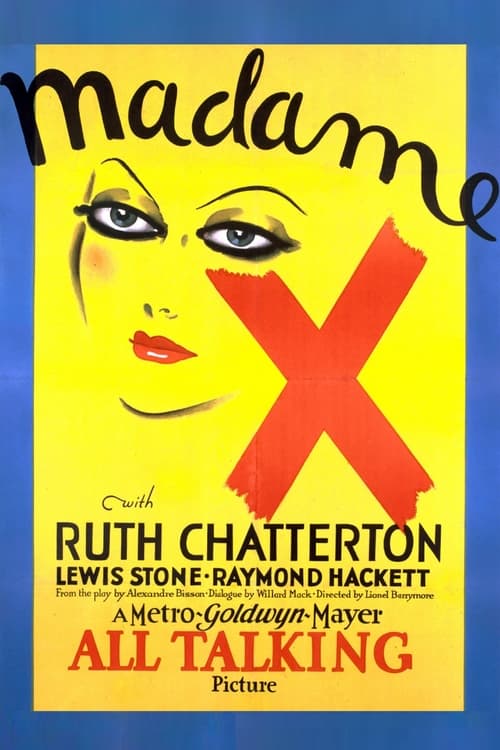
Madame X
1929
No user ratings available yet
Representation score: 1.2 out of 10

Representation Score
Minimal
1926
PassedDirector
Herbert Brenon
Runtime
65 minutes
Average Rating
No ratings yetNew Showbiz Analysis
Dancing Mothers is a period-specific domestic drama that highlights the subversion of traditional feminine roles. By focusing on a mother rebelling against her isolated existence, the film showcases female autonomy within a patriarchal context. However, the film lacks multi-layered complexity. It primarily addresses interpersonal domestic conflicts, leaving significant gaps in representation for various underrepresented groups. Overall, while it challenges the idealized domestic wife, the film remains narrowly focused on individual marital strife.
Category Breakdown
The film does not include any LGBTQ+ characters or non-cisgender identities. The main conflict revolves around heterosexual marriage.
The mother's actions to overcome her isolation suggest she is taking steps to reclaim her independence and autonomy. She is not portrayed as a passive domestic figure.
There is no indication of a racially diverse cast. The story seems to focus on a homogeneous social structure typical of the time period.
The story portrays the nuclear family as dysfunctional, focusing on personal struggles rather than broader societal issues.
The film does not contain any characters with physical, sensory, or neurodivergent disabilities.
Present on Screen
Limited or Absent
Official Synopsis
An unfaithful husband and his daughter go on nightly club outings, leaving the mother at home. The mother rebels against her lonesome life and attempts to prevent a man from pursuing her daughter.
1929
1920
1936
1927
1924
1933
1921
1928
No reviews yet. Be the first to share your thoughts on this movie!
Use the rating form above to leave a star rating and optional review.