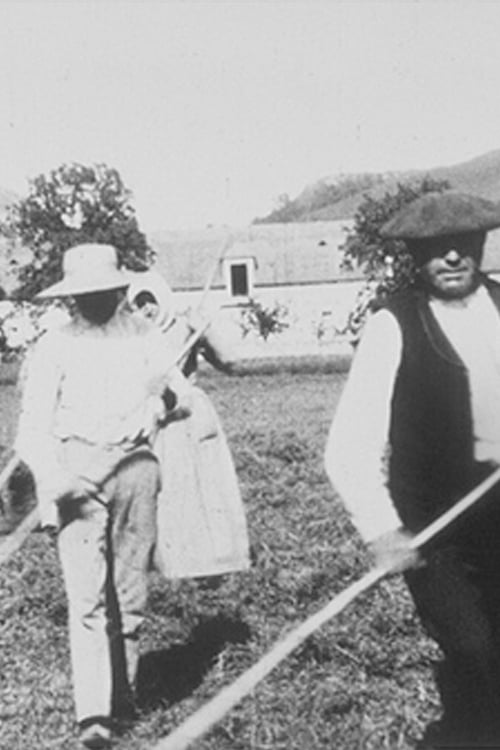
Tedders
1897
No user ratings available yet
Representation score: 1.7 out of 10
Representation Score
Minimal
1904
Director
Cecil M. Hepworth
Runtime
3 minutes
Average Rating
No ratings yetNew Showbiz Analysis
A Day in the Hayfields is a foundational historical document that functions as a chronological observation of agricultural labor. Its narrative is dictated by the natural cycle of hay-making rather than character-driven arcs or social commentary. Because the film is a technical study of seasonal labor from 1904, it lacks the capacity for complex interpersonal dynamics. It reflects the social and demographic constraints of the early 20th century through a purely observational lens. Ultimately, the work does not engage with modern perspectives that reflect multiple aspects of identity, as its primary purpose is to document the process of cutting and stacking grass.
Category Breakdown
The film is a non-narrative documentary focused on agricultural processes. It contains no evidence of romantic pairings or relationships that challenge the assumption that everyone is straight or cisgender.
The film captures manual labor within a traditional agrarian setting. It serves as a historical record of labor without challenging traditional gender roles.
The cast reflects the homogeneous demographic of the period. There is no evidence of intentional racial blending or disruption of Anglo-centric casting norms.
The film presents a straightforward, utilitarian view of rural life. It lacks critiques of Western institutions or complex cultural perspectives.
There is no discernible representation of physical or neurodivergent identities. The footage focuses strictly on the mechanics of hay-making.
Present on Screen
Limited or Absent
Official Synopsis
Documentary on the process of hay-making, from the cutting of the grass to the stacking of the hay.
1897
1896
1896
1906
1897
1942
1896
1906
No reviews yet. Be the first to share your thoughts on this movie!
Use the rating form above to leave a star rating and optional review.