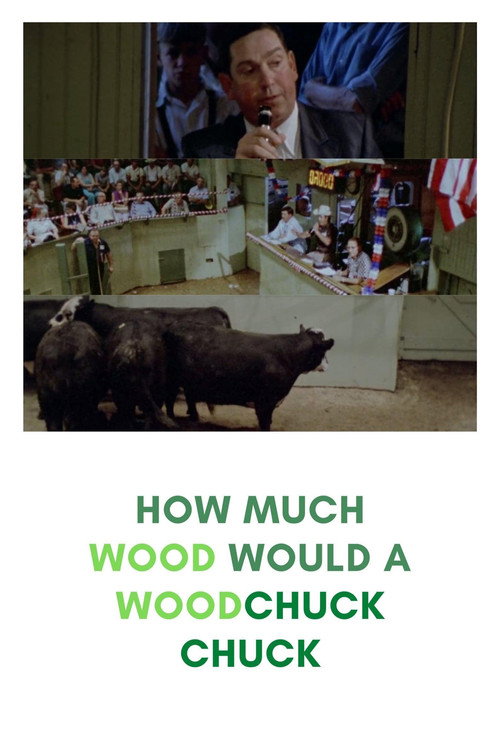
How Much Wood Would a Woodchuck Chuck
1976
No user ratings available yet
Representation score: 1.9 out of 10

Representation Score
Limited
1974
Director
Werner Herzog
Runtime
45 minutes
Average Rating
No ratings yetNew Showbiz Analysis
Werner Herzog’s documentary is a specialized, auteur-driven study of individual consciousness. It prioritizes the psychological experience of a champion ski-flyer over collective social representation. The film operates within a traditional, rural, and religiously-influenced European context. This setting limits the complexity of diverse representation and prevents the subversion of established social hierarchies. Ultimately, the work functions as a study of personal transcendence. It does not engage with identity politics or modern social justice frameworks, remaining a quintessential example of mid-century European auteurism.
Category Breakdown
The film does not include any LGBTQ+ characters or narratives. It focuses solely on the psychological state of the protagonist within a traditional Bavarian setting.
The narrative primarily centers on the male experience. It emphasizes traditional hierarchies by highlighting male-dominated labor and extreme sports.
The film depicts a homogeneous demographic set in rural Bavaria. It lacks perspectives from non-white or non-Anglo-Saxon communities, reflecting a localized European culture.
The work is deeply rooted in Western structures and Catholic traditions. It uses religious imagery to convey the protagonist's spiritual journey.
The film explores the psychological fragility and the madness of the creative process. It frames this as artistic ecstasy rather than a narrative about disability.
Present on Screen
Limited or Absent
Official Synopsis
A study of the psychology of a champion ski-flyer, whose full-time occupation is carpentry.
1976
1978
2005
1999

2015
2003
1978

2014
No reviews yet. Be the first to share your thoughts on this movie!
Use the rating form above to leave a star rating and optional review.